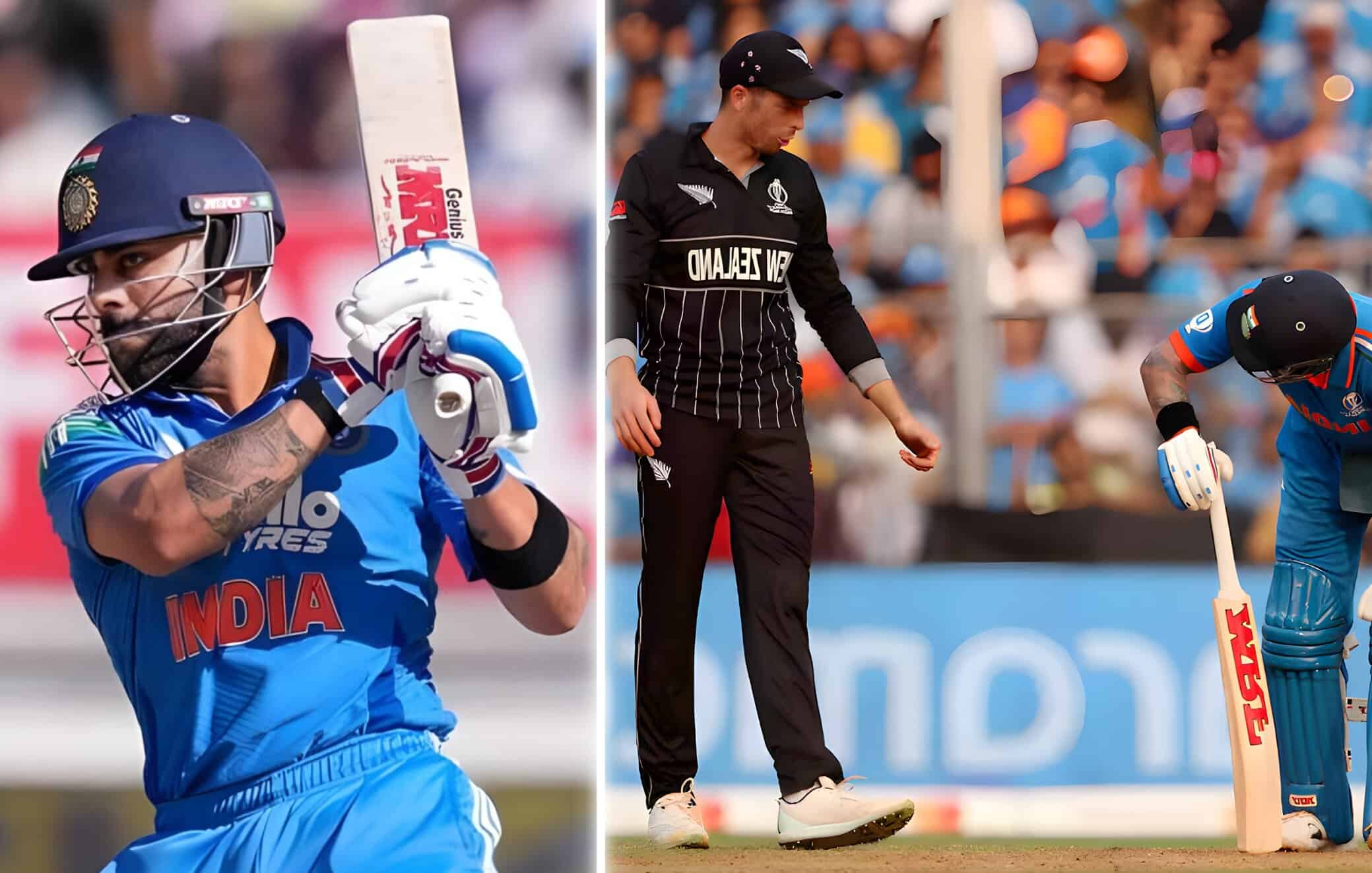
Virat Kohli once again demonstrated why he is regarded as the “King of Chases,” scoring a brilliant 124 during India’s ODI attempt to chase 338 against New Zealand. Despite Kohli’s masterclass, India fell short of the target, largely due to the dismissal of Harshit Rana and other critical setbacks that disrupted the chase. In this analysis, India legend Kris Srikkanth breaks down how the lower-middle-order performance and strategic missteps shaped the outcome.
India vs New Zealand – The High-Scoring Thriller
The third and final ODI between India and New Zealand saw the Kiwis post a massive total of 337 runs. India’s chase began with early setbacks, losing wickets at regular intervals: 1/28, 2/45, 3/68, and 4/71. Nitish Kumar Reddy steadied the innings with a fifty, while Virat Kohli anchored the chase with his century. Despite these efforts, India could not surpass New Zealand’s total, marking a rare instance where Kohli scored a hundred and ended up on the losing side.
Harshit Rana’s Impact and Subsequent Setback
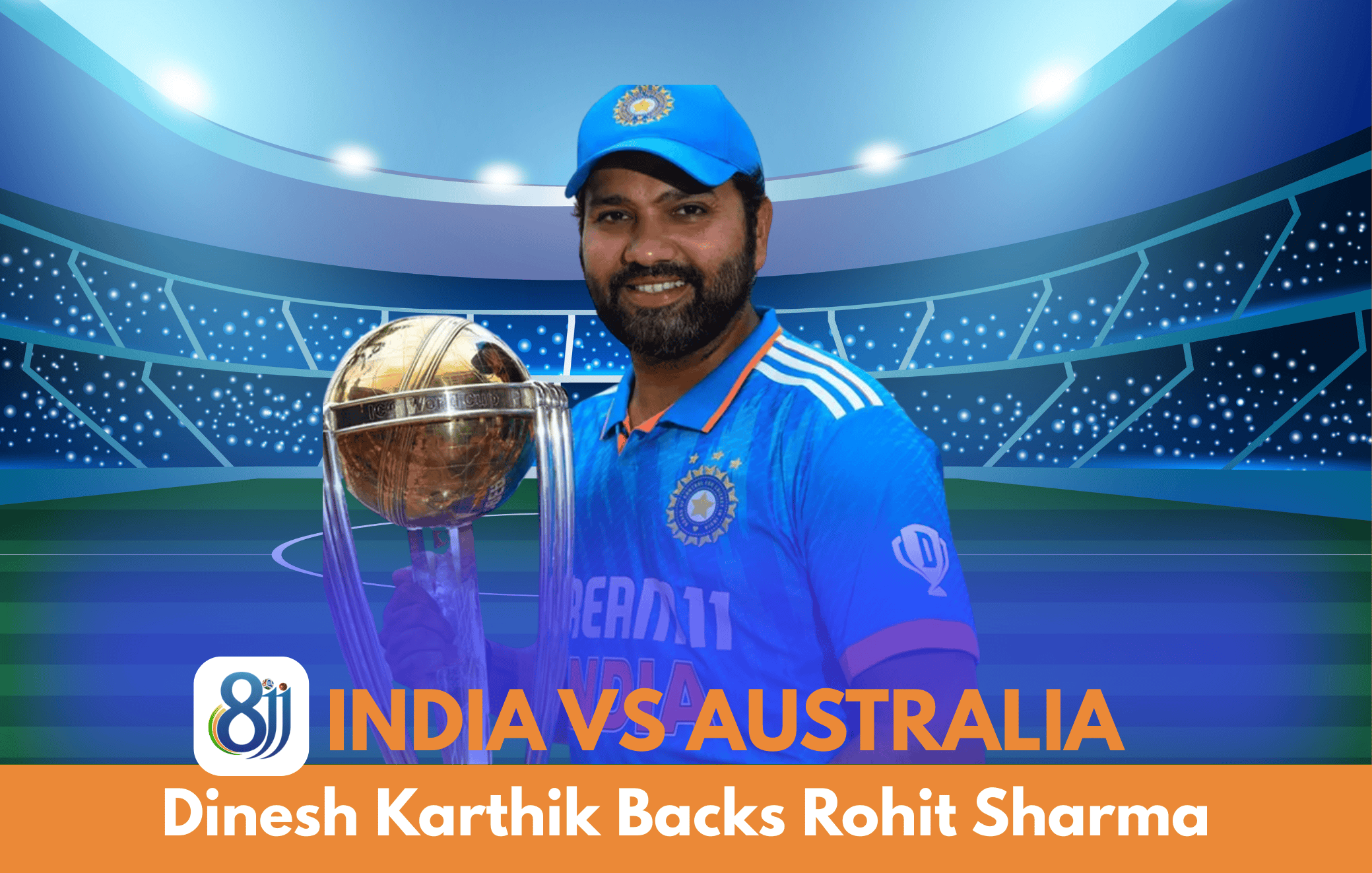
Harshit Rana played a pivotal role alongside Kohli, forming a 99-run partnership for the 7th wicket. Rana contributed 52 crucial runs, keeping the asking rate manageable and unsettling New Zealand’s bowlers. Kris Srikkanth praised Rana’s effortless hitting, stating that the Kiwi captain “was literally shaking” as Rana cleared the boundary repeatedly. However, Rana’s eventual dismissal proved costly. Once he was out, Kohli had to accelerate aggressively, which led to his dismissal for 124.
Analysis of the 7th Wicket Partnership
The partnership between Kohli and Rana highlighted the importance of lower-order resilience in ODI chases. With the asking rate exceeding 11 runs per over, Rana’s ability to reduce it to 10 gave India hope. Nevertheless, the loss of this key contributor forced Kohli to play riskier shots. Srikkanth emphasized that this was a turning point, showing how one wicket in the lower order can dramatically influence a chase of this magnitude.
Nitish Kumar Reddy’s Role in the Chase
Nitish Kumar Reddy’s half-century was also significant, providing a platform for Kohli to build his innings. According to Srikkanth, Reddy might have “eaten up too many balls,” which made the subsequent acceleration necessary. His departure, followed by Rana’s dismissal, left Kohli isolated, and he had no choice but to attempt big shots to keep India in the hunt. This sequence of events ultimately contributed to the team’s inability to reach 338.
Kris Srikkanth’s Insights on Kohli’s Knock
Kris Srikkanth, reflecting on the match in his YouTube analysis, hailed Virat Kohli as the “King of Kings.” He highlighted Kohli’s composure under pressure, stating that despite wickets falling regularly, Kohli maintained focus and scored freely, hitting boundaries and sixes early in his innings. Yet, Srikkanth pointed out that even Kohli’s brilliance could not compensate for the strategic gaps and key dismissals in the lower order.
The Psychological Factor in the Chase
According to Srikkanth, the psychological impact of Harshit Rana’s dismissal on Kohli was evident. Kohli had relied on Rana to stabilize the innings, and losing him forced the superstar to shift gears prematurely. This illustrates the delicate balance between aggression and calculation in ODI chases. Even a player of Kohli’s caliber can be impacted when support from teammates disappears at crucial junctures.
Lessons from India’s ODI Strategy
India’s approach to this high-stakes chase highlights the importance of constructing innings with lower-order contributions in mind. The match underscored that a single setback, like Rana’s dismissal, can cascade into a strategic problem for the team. Coaches and analysts may take note of this match to ensure that future ODI chases allow for more depth and flexibility in the batting order.
Conclusion: Virat Kohli and the Harshit Rana Setback
In conclusion, Virat Kohli’s 124-run effort in India’s chase of 338 against New Zealand showcased his unmatched ability in pressure situations. However, the dismissal of Harshit Rana and earlier departures of other lower-order batters forced Kohli into an aggressive mode, ultimately leading to his dismissal and India’s loss. Kris Srikkanth’s analysis underscores how pivotal lower-order partnerships are in high-scoring ODI games and how one wicket can alter the course of a chase.
Moving forward, India may look to strengthen the depth of their batting lineup, ensuring that players like Harshit Rana and Nitish Kumar Reddy can not only stabilize innings but also complement star performers like Virat Kohli in match-defining scenarios. By learning from these setbacks, Team India can improve their chances in future high-stakes ODIs, making Kohli’s monumental efforts more likely to translate into victories.
🔗 Visit our other platforms:
8jjSports.com