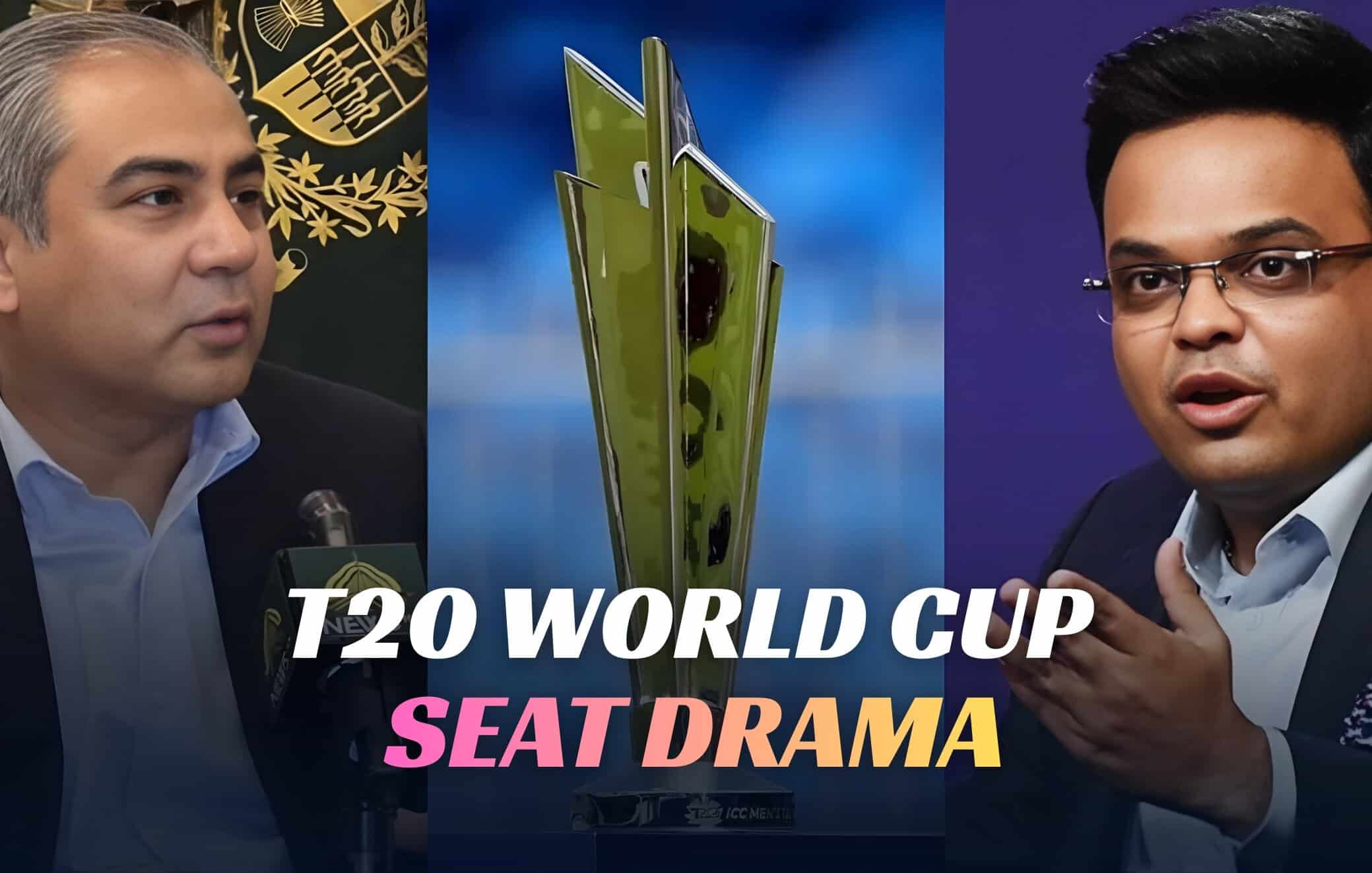
T20 World Cup uncertainty intensified as fresh twists emerged around Pakistan’s participation, Uganda’s surprise offer, and growing speculation within the international cricket community. The T20 World Cup has become the center of attention after discussions between the Pakistan Cricket Board and the country’s leadership, raising questions about withdrawals, replacements, and the ICC’s contingency planning.
T20 World Cup Uncertainty Reaches a Climax
The T20 World Cup situation took a dramatic turn when Pakistan Cricket Board chairman Mohsin Naqvi met Prime Minister Shehbaz Sharif to discuss what he described publicly as an important “ICC matter.” The meeting immediately fueled speculation that Pakistan could reconsider its position regarding the T20 World Cup, especially amid geopolitical and security-related discussions surrounding the tournament.
Following the meeting, Mohsin Naqvi stated that a final decision would be announced either by Friday or Monday, February 2. This statement only deepened suspense, as fans and analysts attempted to read between the lines of what Pakistan’s stance might be. The T20 World Cup narrative has since shifted from on-field cricket to boardroom diplomacy.
ICC Faces Replacement Challenges After Withdrawals
The T20 World Cup has already been affected by one notable change. Bangladesh was replaced by Scotland after Bangladesh declined to play its matches in India, citing security concerns. This decision forced the ICC to act quickly, highlighting how sensitive logistics and international relations have become around the tournament.
With Bangladesh stepping aside, the possibility of Pakistan also withdrawing raised alarm within cricket administration circles. Losing another major team would leave a significant gap in the T20 World Cup lineup and place the ICC under immense pressure to find a credible replacement at short notice.
Why Pakistan’s Decision Matters to the T20 World Cup
Pakistan remains one of the most followed teams in global cricket, and its participation is vital to the commercial and competitive success of the T20 World Cup. Any withdrawal would not only disrupt fixtures but also impact broadcast agreements and fan engagement worldwide.
This is why the ICC has been monitoring developments closely, while other cricket boards remain alert to potential opportunities created by uncertainty.
Uganda’s Bold and Viral T20 World Cup Offer
As speculation swirled, Uganda seized the moment with a bold and humorous public offer. Cricket Uganda posted on social media that if a T20 World Cup seat opened up, the nation was ready to step in immediately. Their post quickly went viral, injecting humor into an otherwise tense situation.
Uganda’s message emphasized readiness, enthusiasm, and resilience, presenting the country as eager to embrace the pressure of the T20 World Cup. The post resonated with fans globally, many of whom praised Uganda’s confidence and spirit.
Symbolism Behind Uganda’s T20 World Cup Message
While humorous in tone, Uganda’s offer carried a serious undertone. Associate nations often struggle for opportunities on the global stage, and the T20 World Cup represents a rare chance to gain exposure, experience, and development.
By publicly declaring readiness, Uganda positioned itself as a willing and capable participant should the ICC need a replacement. The moment highlighted how the T20 World Cup can open doors beyond traditional cricketing powerhouses.
Iceland Cricket’s Withdrawal Adds to the Drama
Adding another layer to the unfolding T20 World Cup saga was Iceland Cricket’s tongue-in-cheek “withdrawal.” Iceland had earlier jokingly offered to replace Pakistan, only to later announce they were no longer available.
Their follow-up message humorously suggested that Uganda could benefit instead, further amplifying Uganda’s spotlight. While Iceland’s involvement was lighthearted, it underscored how the T20 World Cup conversation had captured the imagination of cricket fans far beyond the usual circles.
PCB Travel Plans Signal T20 World Cup Commitment
Despite speculation, developments from within the Pakistan Cricket Board suggested a different reality. Sources close to the board confirmed that travel arrangements had already been made for Pakistan’s T20 World Cup squad to depart for Colombo early on February 2.
These preparations strongly indicated that Pakistan had no intention of boycotting the T20 World Cup or skipping high-profile matches, including the much-anticipated clash against India. For many observers, this logistical step all but ruled out a late withdrawal.
Pakistan’s Support for Bangladesh and ICC Relations
The PCB has publicly supported Bangladesh’s stance regarding security concerns, but insiders noted that Pakistan could not escalate matters further without harming its own standing within the ICC. Maintaining stable relationships with the ICC and other member boards remains a priority for Pakistan cricket.
This balancing act has shaped Pakistan’s approach to the T20 World Cup situation, favoring dialogue and long-term stability over dramatic action.
Media Speculation vs. Internal Reality
The T20 World Cup narrative has been fueled by intense media speculation suggesting Pakistan might refuse to play India or pull out of the tournament altogether. However, insiders dismissed these reports as rumors lacking substance.
According to sources familiar with discussions at the highest level, Mohsin Naqvi emphasized that all decisions must ensure a stable and prosperous future for Pakistan cricket. Preserving goodwill with the ICC and fellow member boards was described as non-negotiable.
Expected Confirmation of Pakistan’s Participation
All signs now point toward Pakistan confirming its participation in the T20 World Cup within days. Officials expect an announcement soon, putting an end to weeks of speculation and restoring clarity to the tournament structure.
For the ICC, this confirmation would ease pressure and allow focus to return to cricketing preparations rather than administrative contingency plans.
What the T20 World Cup Episode Reveals About Global Cricket
The unfolding situation around the T20 World Cup has highlighted how interconnected cricket has become with politics, security, and global diplomacy. Decisions made off the field now carry consequences just as significant as those made during matches.
At the same time, the episode showcased the ambition of emerging nations like Uganda, whose readiness and humor captured global attention. The T20 World Cup continues to serve as a platform not only for elite competition but also for broader inclusion and opportunity.
Conclusion: T20 World Cup Stability Likely Restored
The T20 World Cup appears set to move forward with Pakistan’s participation intact, despite the drama that briefly surrounded its status. Uganda’s viral offer and Iceland’s playful withdrawal added color to the situation, but practical realities suggest continuity rather than upheaval.
As the ICC prepares for the tournament, the focus is expected to shift back to cricketing excellence. The T20 World Cup, once again, proves that the stories beyond the boundary can be just as compelling as the action on the field.
🔗 Visit our other platforms:
8jjSports.com