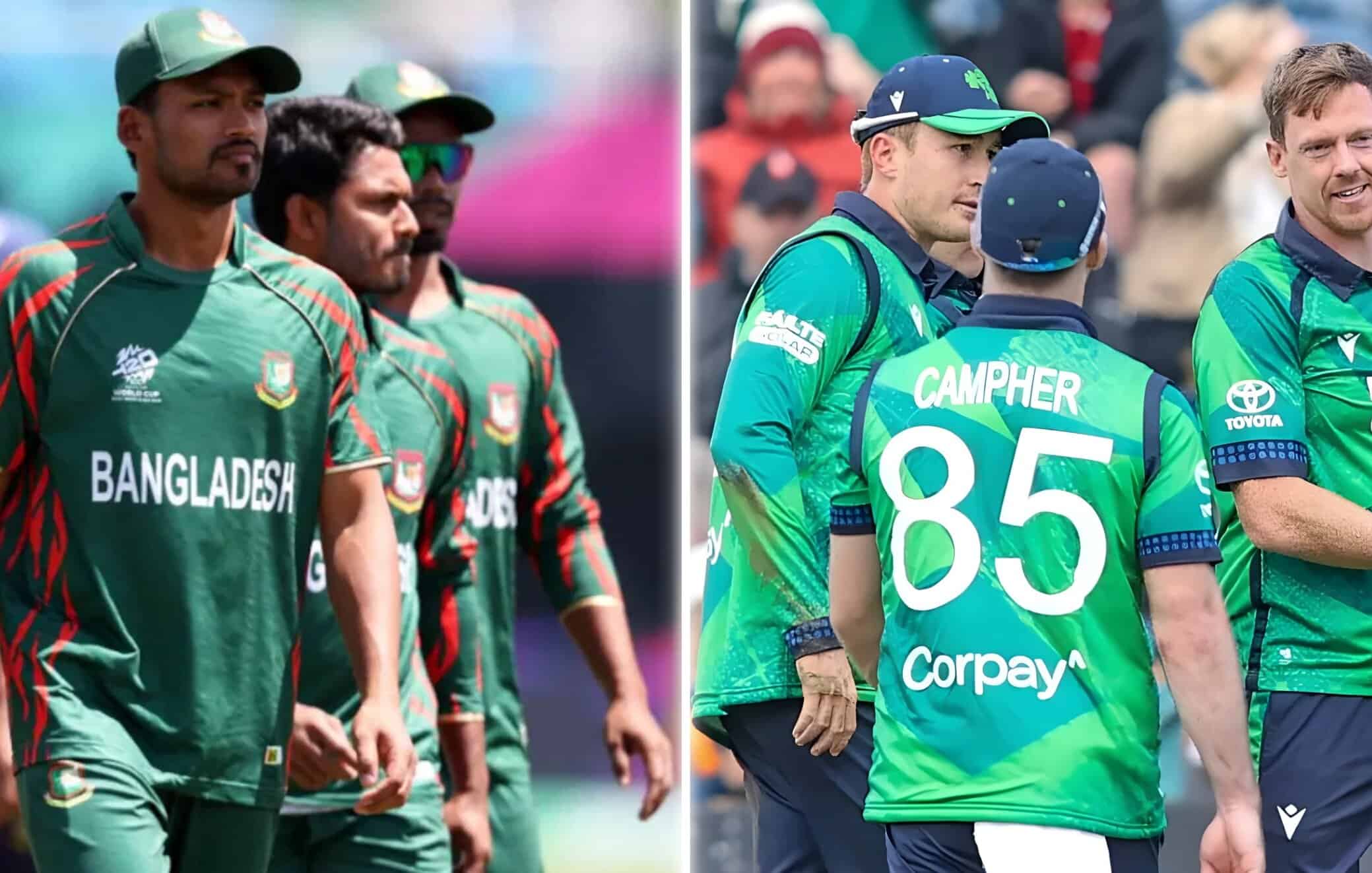
T20 World Cup discussions have taken a dramatic turn as Ireland officially responded to Bangladesh’s proposal to alter group allocations ahead of the 2026 tournament. The issue has triggered intense debate within the global cricket community, with scheduling, security concerns, and logistical balance now at the center of the T20 World Cup conversation. Ireland’s clear stance has added a decisive chapter to a growing controversy involving the ICC, Bangladesh, and tournament hosts.
T20 World Cup 2026 Controversy Explained
The T20 World Cup 2026 is still months away, yet off-field developments have already dominated headlines. Bangladesh, through its cricket board, approached the ICC with a proposal that would significantly alter the tournament’s group structure. The suggestion centered on a potential group swap with Ireland, allowing Bangladesh to play all their group-stage matches in Sri Lanka instead of India.
This request stemmed from Bangladesh’s longstanding position regarding travel concerns related to India. As the T20 World Cup planning phase intensified, these concerns were formally communicated, prompting discussions at the ICC level. The proposal immediately raised questions about fairness, competitive balance, and operational feasibility within the T20 World Cup framework.
Bangladesh’s Request and ICC Discussions
Why Bangladesh Wants a Venue Change
For the T20 World Cup, Bangladesh expressed reservations about playing matches in India. Officials conveyed concerns involving safety, security, and the overall well-being of players, staff, fans, and media personnel. These concerns were escalated during official ICC meetings, where Bangladesh reiterated its preference for Sri Lanka as an alternative host for its group-stage fixtures.
Within those discussions, the idea of a group swap emerged as a compromise. By moving Bangladesh into Ireland’s group, tournament organizers could theoretically limit scheduling disruptions while accommodating Bangladesh’s venue request. The ICC acknowledged that the matter was discussed in a professional and constructive manner, keeping the integrity of the T20 World Cup in focus.
Impact on T20 World Cup Group Structure
Under the existing T20 World Cup structure, Ireland are placed in Group B alongside Australia, Sri Lanka, Zimbabwe, and Oman, with matches scheduled in Sri Lanka. Bangladesh, meanwhile, are slotted into Group C with England, West Indies, Italy, and Nepal, with fixtures assigned to Indian venues such as Kolkata and Mumbai.
A group swap would have reshuffled these combinations, altering competitive dynamics and potentially affecting preparation strategies for several teams. Such a move would also require approvals from multiple stakeholders, including broadcasters, host boards, and participating nations.
Ireland Breaks Silence on Group Swap Proposal
Cricket Ireland’s Firm Position
Ireland have now publicly addressed the T20 World Cup group swap idea, offering clarity amid speculation. Cricket Ireland confirmed that they have received definitive assurances from the ICC that their original schedule will remain unchanged. According to Irish officials, the team will play all of its T20 World Cup group-stage matches in Sri Lanka as initially planned.
This response effectively rules out Ireland’s willingness—or need—to participate in any group restructuring. From Ireland’s perspective, preparation for the T20 World Cup has already been aligned with Sri Lankan conditions, and any late changes could disrupt months of planning.
What Ireland’s Statement Means for the T20 World Cup
Ireland’s stance sends a strong signal to the ICC that stability and certainty are essential as the T20 World Cup approaches. With assurances in place, Ireland are now focused solely on performance, rather than administrative uncertainty. Their confirmation also reduces the likelihood of a group swap being implemented, narrowing the ICC’s options in addressing Bangladesh’s concerns.
Groups, Venues, and Competitive Balance
Group B Outlook Featuring Ireland
In the current T20 World Cup setup, Ireland face a challenging group that includes Australia and Sri Lanka. Playing in Sri Lankan conditions, Ireland will rely on familiarity with spin-friendly pitches and slower surfaces. Maintaining the original group composition ensures competitive integrity and preserves the balance intended by tournament planners.
Group C Challenges for Bangladesh
Bangladesh’s Group C features traditional powerhouses such as England and the West Indies, alongside emerging teams Italy and Nepal. Playing these matches in India presents conditions that could differ significantly from Sri Lanka. Bangladesh’s request highlights how venue conditions can influence strategic planning in a T20 World Cup environment.
ICC’s Role and Possible Outcomes
Balancing Concerns and Fairness
The ICC now faces a complex task. On one hand, it must consider the genuine concerns raised by Bangladesh. On the other, it must uphold fairness, consistency, and contractual obligations tied to the T20 World Cup. With Ireland confirming their schedule will not change, the feasibility of a group swap appears increasingly limited.
Alternative Solutions for the T20 World Cup
Should a group swap be ruled out, the ICC may explore other options, such as enhanced security protocols or limited venue adjustments. However, any solution must align with the broader logistical framework of the T20 World Cup, ensuring minimal disruption for teams, fans, and commercial partners.
What This Means for Teams and Fans
Preparation and Planning
For teams like Ireland, certainty allows focused preparation. Training camps, player selection, and tactical planning are all influenced by venue conditions. The assurance of playing in Sri Lanka enables Ireland to fine-tune their approach for the T20 World Cup without distraction.
Fan Expectations and Tournament Integrity
Fans closely follow developments surrounding the T20 World Cup, and transparency is crucial to maintaining trust. Sudden changes to groups or venues can impact travel plans and viewing experiences. Ireland’s confirmation provides reassurance that the tournament structure remains largely intact.
Conclusion: T20 World Cup Stability Takes Priority
The T20 World Cup continues to generate headlines not only for on-field rivalries but also for critical administrative decisions. Ireland’s clear response to Bangladesh’s group swap idea underscores the importance of stability and advance planning. While Bangladesh’s concerns remain part of ongoing discussions, the likelihood of major structural changes appears slim.
As the ICC navigates these challenges, the focus will remain on delivering a competitive, secure, and globally celebrated T20 World Cup. For now, Ireland’s position brings much-needed clarity, ensuring that teams and fans alike can look ahead with confidence.
🔗 Visit our other platforms:
8jjSports.com