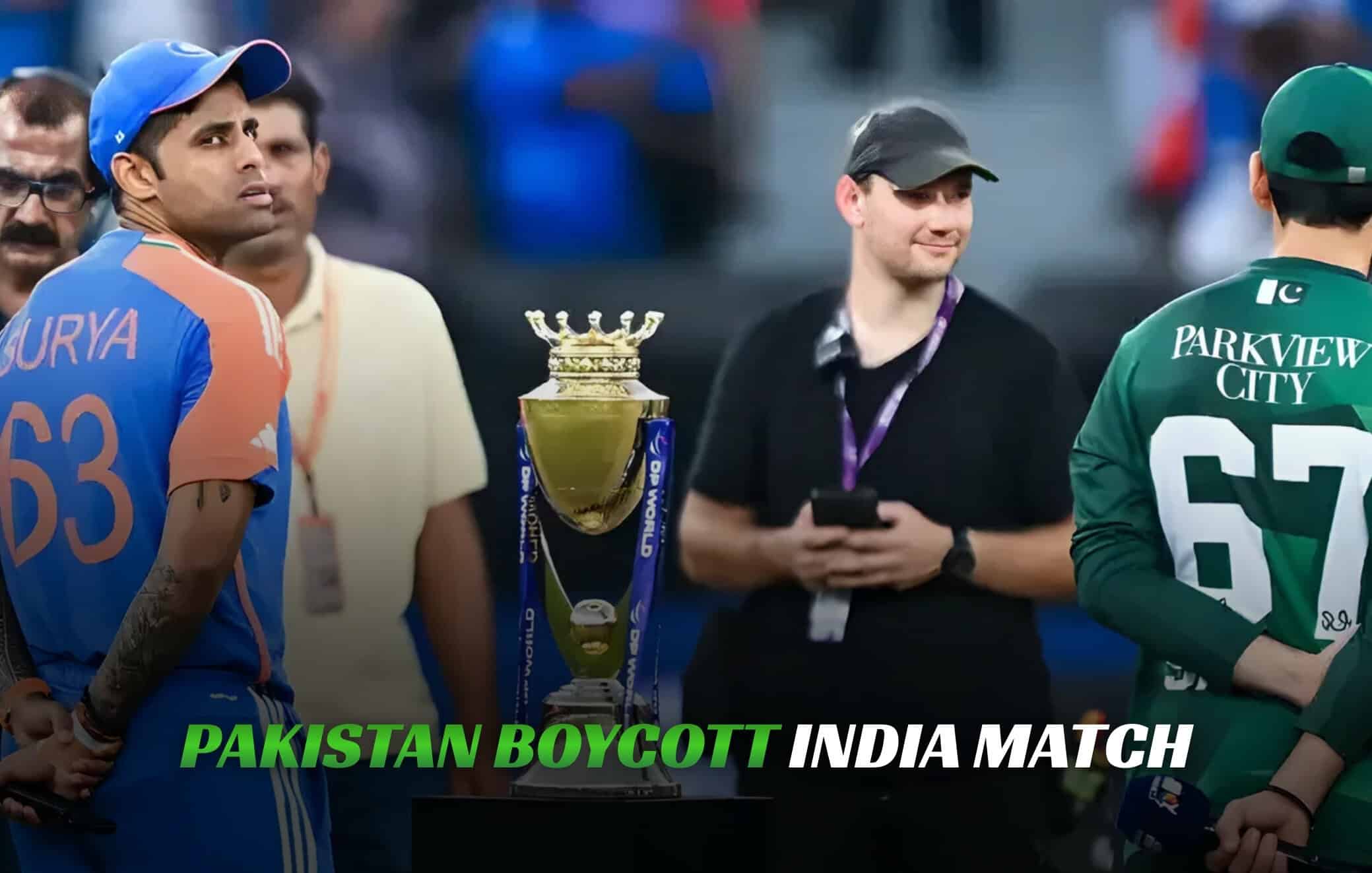
Pakistan boycott fears have taken center stage ahead of the highly anticipated India vs Pakistan clash at the T20 World Cup 2026, with serious sporting and commercial consequences looming large. The potential refusal by Pakistan to take the field against India on February 15 in Colombo has sparked intense debate within global cricket circles, raising questions about points allocation, tournament integrity, and the International Cricket Council’s authority. As uncertainty continues, multiple outcomes are being discussed, each carrying significant implications for both teams and the tournament as a whole.
Pakistan Boycott and the India vs Pakistan T20 World Cup Match
The Pakistan boycott threat stems from a reported government directive that could prevent the national team from participating in the marquee India vs Pakistan T20 World Cup fixture. While the Pakistan Cricket Board has not formally communicated this stance to the ICC, the situation has already unsettled fans, broadcasters, and sponsors. The rivalry is considered the biggest commercial driver in global cricket, and a Pakistan boycott would disrupt carefully planned schedules and revenue streams tied to the T20 World Cup 2026.
The India vs Pakistan contest is not just another group-stage game. It often defines tournament momentum, fan engagement, and global viewership numbers. A Pakistan boycott, therefore, has consequences far beyond the two competing teams, putting pressure on cricket’s governing bodies to find a workable resolution.
Scenario 1: India Get a Walkover Due to Pakistan Boycott
How a Walkover Could Be Awarded
In the event of a Pakistan boycott where the team fails to appear for the toss, the match referee would be compelled to award a walkover to India. The Board of Control for Cricket in India has already confirmed that the Indian squad, led by Suryakumar Yadav, will travel to Colombo and follow all ICC protocols.
Under ICC playing conditions, if one team does not show up for the toss, the opposing side is awarded a walkover and receives two crucial points. This Pakistan boycott scenario would immediately benefit India in the T20 World Cup standings.
Impact on Points and Net Run Rate
A walkover due to Pakistan boycott would hand India two points without a ball being bowled, strengthening their position for qualification. For Pakistan, the outcome would be damaging, as they would earn zero points while also taking a hit to their Net Run Rate. In a tightly contested group, such a setback could make progression to the knockout stages significantly harder.
Scenario 2: Points Shared If Both Teams Skip the Toss
Rare but Possible Outcome
Another Pakistan boycott-related outcome involves both teams being absent at the toss. If neither captain appears, ICC regulations allow the match referee to declare the game abandoned and award one point to each side. While rare, this scenario remains technically possible under tournament rules.
Why This Scenario Is Unlikely
Reports suggest India has no intention of missing the match under any circumstances. The Indian team plans to arrive at the stadium, conduct training sessions, and attend press obligations as scheduled. As a result, a shared-points outcome linked to a Pakistan boycott would require India to change its stance, which currently appears improbable.
Scenario 3: ICC Intervention Ends the Pakistan Boycott
The Best-Case Scenario for World Cricket
The most favorable outcome would see the ICC successfully mediating between stakeholders to convince Pakistan to reverse the boycott decision. This scenario preserves the integrity of the T20 World Cup and delivers the marquee India vs Pakistan clash that fans worldwide eagerly anticipate.
Why ICC Pressure Matters
The ICC has a vested interest in ensuring that its flagship events proceed without political interference. A Pakistan boycott could set a dangerous precedent, encouraging future withdrawals and undermining the sport’s governance structure. By intervening decisively, the ICC can reinforce its authority and protect the commercial and sporting value of the tournament.
India’s Clear Stance Amid Pakistan Boycott Uncertainty
Commitment to ICC Protocol
Despite the Pakistan boycott concerns, India has maintained a firm and consistent position. According to sources, the Indian team will follow ICC protocol strictly, traveling to Sri Lanka, practicing as scheduled, and waiting for official instructions from match officials.
No Intention to Skip the Match
Indian officials have reiterated that the team will not voluntarily forfeit or withdraw from the fixture. This clarity strengthens India’s position in any Pakistan boycott scenario, ensuring that responsibility for any disruption rests solely with the opposing side.
Commercial Fallout of a Pakistan Boycott
Broadcasters and Sponsors at Risk
An India vs Pakistan match generates some of the highest viewership numbers in global sport. A Pakistan boycott would deal a severe blow to broadcasters and sponsors who invest heavily in advertising slots tied to this rivalry. The financial implications could extend beyond a single match, affecting future tournament valuations.
Fans Lose the Biggest Rivalry
Beyond economics, a Pakistan boycott deprives fans of cricket’s most intense and emotionally charged contest. For many supporters, the India vs Pakistan clash is the highlight of any World Cup, and its absence would leave a noticeable void in the tournament narrative.
Historical Context of Political Tensions in Cricket
Politics and the India Pakistan Rivalry
The Pakistan boycott debate is not occurring in isolation. Political tensions have historically influenced cricketing ties between the two nations, leading to canceled tours and neutral-venue matches. However, global tournaments have traditionally served as neutral ground where cricket transcends politics.
Why This Situation Is Different
What makes the current Pakistan boycott issue particularly serious is its timing during a major ICC event. Unlike bilateral series, World Cups operate under strict regulations, making unilateral withdrawal far more consequential.
What Happens Next If Pakistan Maintain the Boycott?
ICC Disciplinary Measures
If the Pakistan boycott becomes official, the ICC could explore disciplinary options, including fines or further sanctions. While points allocation is immediate, long-term repercussions may follow depending on how the situation unfolds.
Tournament Integrity Under Scrutiny
Repeated disruptions caused by a Pakistan boycott would raise broader questions about tournament planning and governance. Ensuring fairness for all competing teams will be a priority for match officials and administrators alike.
Final Outlook on the Pakistan Boycott Situation
The Pakistan boycott threat has introduced unprecedented uncertainty into the T20 World Cup 2026. With only three realistic scenarios—an Indian walkover, shared points, or successful ICC mediation—the coming days will be crucial. While India’s position remains clear and protocol-driven, the final outcome depends on whether Pakistan chooses participation over protest.
For the sake of the tournament, fans, and the sport itself, stakeholders will hope that cricket prevails over controversy and that the world witnesses the rivalry as scheduled rather than debated off the field.
🔗 Visit our other platforms:
8jjSports.com