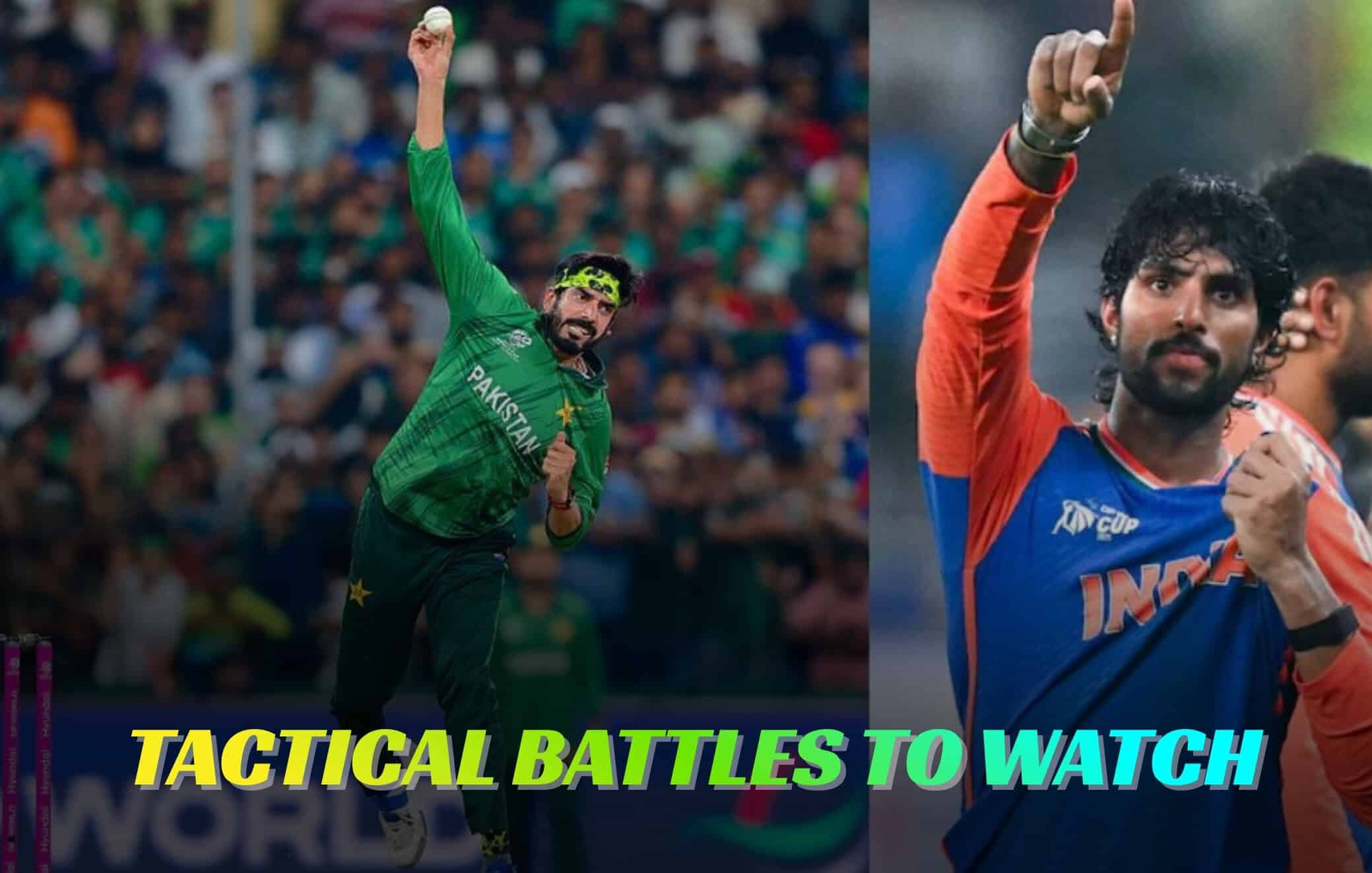
India vs Pakistan will once again take centre stage at the T20 World Cup 2026, and these 4 explosive tactical battles could ultimately decide who seizes control of this high-voltage clash. With both teams in strong form and familiar with each other’s strengths, the contest may come down to key individual duels that shape momentum across phases of the game.
The India vs Pakistan rivalry is rarely short on drama, but in T20 World Cup 2026 conditions, fine tactical margins could separate victory from defeat. While it is officially 11 vs 11, history shows that defining moments often emerge from specific match-ups. From powerplay aggression to middle-overs control, the following four battles could prove decisive.
The first major India vs Pakistan duel to watch is Jasprit Bumrah vs Sahibzada Farhan.
During previous encounters, Farhan stunned observers by clearing Bumrah for sixes, something few batters have managed consistently. Bumrah, widely regarded as one of the best T20I bowlers in the world, typically operates with precision and subtle variations.
In the Asia Cup final, India used Bumrah aggressively in the powerplay, but his recent pattern has seen him bowl fewer early overs. The tactical question for T20 World Cup 2026 is whether India unleash Bumrah early against Farhan again or hold him back for later breakthroughs. Farhan’s approach will be equally crucial—whether he continues attacking upfront or tempers risk in a high-pressure India vs Pakistan setting.
The second explosive battle in India vs Pakistan involves Shaheen Shah Afridi and Abhishek Sharma.
Shaheen’s ability to strike in the first over is well documented, and he shares the record for most first-over wickets in T20Is. Abhishek, however, has built a reputation for fearless starts, particularly in the powerplay. In previous meetings, Abhishek attacked Shaheen effectively, scoring freely without losing his wicket.
Heading into the T20 World Cup 2026 clash, Abhishek returns after illness, which adds another layer of intrigue. If Shaheen finds early swing, Pakistan could seize control; if Abhishek counters with aggression, India could dictate the tempo immediately in this India vs Pakistan showdown.
The third key tactical battle in India vs Pakistan centres on spin in the powerplay, particularly Saim Ayub against Ishan Kishan. Kishan has been in blistering form, striking at an exceptional rate in recent T20Is.
However, statistical trends suggest he is slightly less destructive against spin inside the first six overs. Pakistan have previously used Ayub as a part-time offspinner during the powerplay to disrupt rhythm. In turning conditions at the T20 World Cup 2026 venue, deploying Ayub early could be a strategic move. If Kishan negotiates spin confidently, India gain momentum; if Ayub strikes, Pakistan tilt the balance in this finely poised India vs Pakistan encounter.
The fourth and perhaps most nuanced India vs Pakistan battle is Abrar Ahmed vs Suryakumar Yadav in the middle overs. Abrar has established himself as a key wicket-taking spinner with excellent control during overs 7 to 16. His economy rate in this phase ranks among the best in recent T20I tournaments. Suryakumar, meanwhile, thrives in the same middle phase, often dismantling spin with innovative sweeps and scoops.
Across his T20I career, Suryakumar has scored heavily against legspin, maintaining a strike rate well above 200 against that style. In T20 World Cup 2026 conditions that may assist turn, this contest could define the flow of the innings. If Abrar restricts Suryakumar’s scoring arc, Pakistan gain control; if Suryakumar dominates, India may surge ahead decisively.
Beyond individual battles, India vs Pakistan games are shaped by how captains manage phases.
Field placements, bowling rotations, and match-ups are critical in T20 cricket, especially in tournaments like the T20 World Cup 2026 where margins are slim. India’s depth with allrounders provides flexibility, while Pakistan’s varied pace and spin options allow for tactical adaptability.
Conditions also matter in an India vs Pakistan clash.
If the surface offers grip and turn, spinners such as Abrar and India’s own options could play enhanced roles. If pace and bounce dominate, bowlers like Bumrah and Shaheen may hold the key. The captain who reads conditions quicker and adjusts match-ups accordingly could gain a vital edge.
Another factor in this India vs Pakistan contest is composure under pressure.
Both teams have experienced dramatic collapses and late recoveries in recent tournaments. Handling crunch moments whether defending a total or chasing under lights requires clarity in execution. The T20 World Cup 2026 stage magnifies every mistake, and a single over can swing momentum irreversibly.
While statistics provide context, India vs Pakistan encounters often transcend numbers.
Emotion, crowd intensity, and historical baggage influence tempo and decision-making. However, the four tactical battles outlined Bumrah vs Farhan, Shaheen vs Abhishek, Ayub vs Kishan, and Abrar vs Suryakumar offer the clearest lens through which this match can be analysed.
Ultimately, the T20 World Cup 2026 fixture between India vs Pakistan will hinge on who wins more of these micro-contests within the broader contest. Powerplay aggression, middle-overs control, and strategic spin usage will likely determine the outcome. As anticipation builds, all eyes turn to these defining duels that promise to shape yet another unforgettable chapter in the India vs Pakistan rivalry. Explore More
🔗 Visit our other platforms:
8jjSports.com