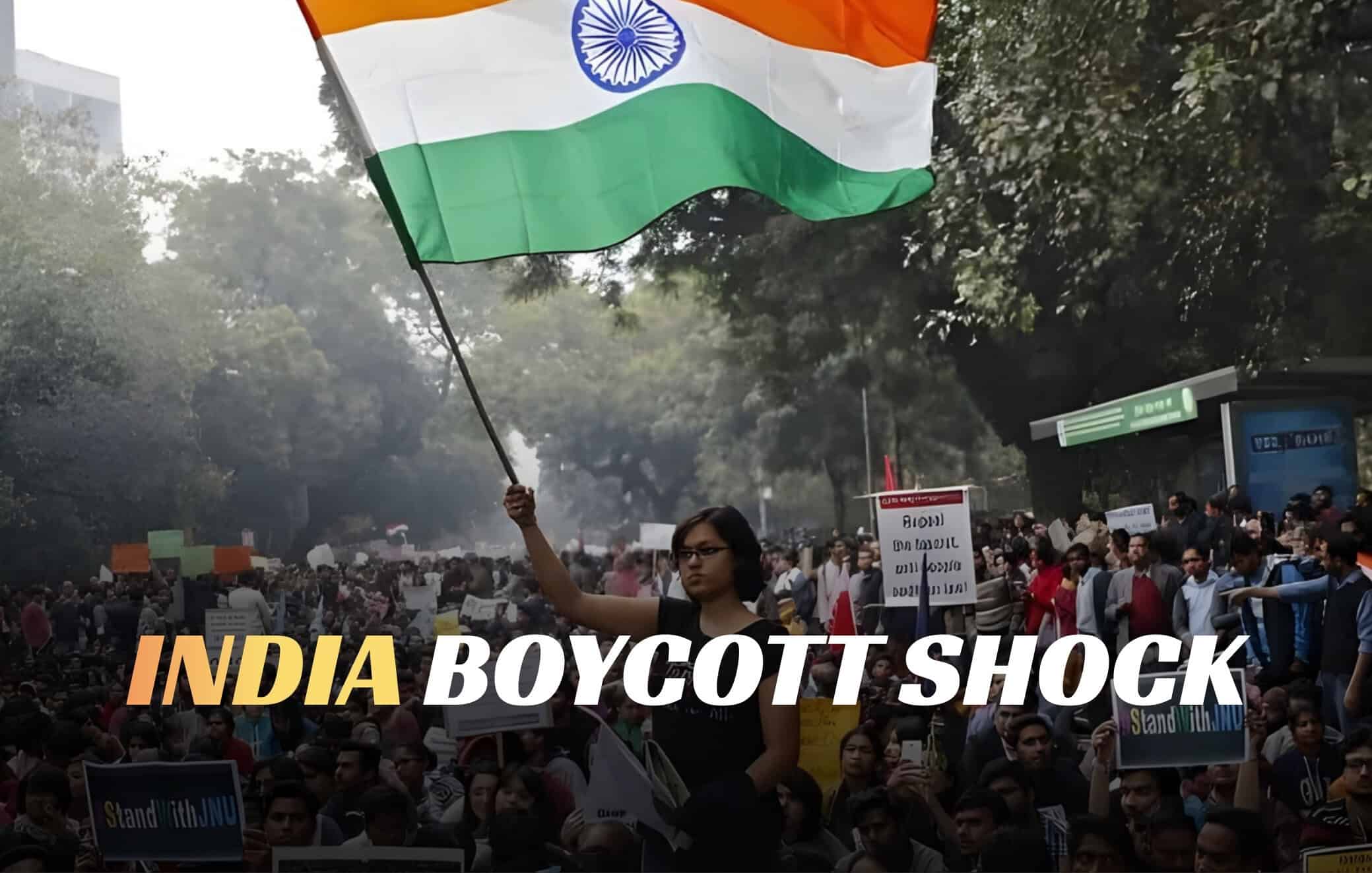
India boycott headlines have erupted across the cricket world after Pakistan announced it will skip only one match at the T20 World Cup 2026 its fixture against India on February 15 while still playing the rest of the tournament. This India boycott move, framed as a protest tied to Bangladesh’s removal from the event, has triggered sharp criticism over selective participation, mixed messaging, and the real motivations behind the decision. India Boycott: What Pakistan Announced and Why It Matters
The India boycott announcement is unusual not because cricket boards have never clashed with the ICC, but because this stance targets a single marquee game while leaving the rest of the schedule untouched. The Pakistan government cleared its team to participate in the T20 World Cup 2026, yet specifically instructed the side to not take the field against India, creating a contradiction at the heart of the protest.
This approach has fueled debate about whether the Pakistan government is making a principled stand or trying to balance politics with the benefits of staying inside the ICC ecosystem. The India boycott is being presented as solidarity with Bangladesh, but the narrow focus on one opponent has raised questions about consistency and credibility.
T20 World Cup 2026 Context: The Trigger Behind the India Boycott
The T20 World Cup 2026 controversy gained momentum after Bangladesh was removed from the tournament following their refusal to play matches in India due to security concerns. Bangladesh requested venue changes, and when that request was rejected, the ICC took the drastic step of excluding them from the competition.
Pakistan, vocal in its support for Bangladesh, has portrayed the decision as evidence of unequal treatment. That’s the political and administrative backdrop now being used to justify the India boycott, even though Pakistan is still set to compete against every other team in the group.
Pakistan Government’s Role in the India Boycott
A key feature of this India boycott story is that the signal is coming from the state. The Pakistan government publicly positioned the boycott as an official decision, rather than leaving the matter to the Pakistan Cricket Board. In cricket terms, that matters because the ICC deals with member boards, but the pressure here is being applied above the board level.
That dynamic has intensified scrutiny, because a government-led boycott implies national policy considerations, while the tournament operates on sporting rules and contractual obligations. The India boycott therefore sits at the volatile intersection of politics and global sport.
ICC Response: Why Selective Participation Is Under Fire
The ICC response to selective participation has been consistently firm in past disputes, and the logic is straightforward: a World Cup format depends on every qualified team playing every scheduled match. If teams can choose opponents, the credibility of the tournament structure collapses.
In this case, the ICC response has been framed around integrity and fairness—arguing that an India boycott undermines competitive balance and harms fans. The bigger fear for administrators is precedent: if one board can skip one fixture, another board may attempt the same when political or commercial incentives align.
ICC Response vs. Public Messaging
The ICC response also challenges the optics of a protest that keeps one foot in the tournament. Critics argue that a real boycott, if based on broken “principles,” would mean withdrawing entirely. Instead, the India boycott is being portrayed as a selective disruption of the event’s most high-profile game while still enjoying the protections and privileges of participation.
That contrast—public outrage on one hand, continued involvement on the other—is why the debate has shifted from “what happened to Bangladesh” to “what does Pakistan really want from this India boycott?”
PCB Revenue: The Core Contradiction Critics Point To
One reason the India boycott is drawing such harsh analysis is the financial reality of ICC events. The PCB revenue stream is closely linked to ICC distributions and tournament participation, and remaining in the T20 World Cup 2026 keeps Pakistan aligned with those benefits.
Critics argue that the selective boycott allows Pakistan to make a political statement without paying the maximum cost of a full withdrawal. In other words, the India boycott becomes a headline-grabbing act while Pakistan still competes for points, prize money, and its share of global cricket income.
PCB Revenue and the “Pick-and-Choose” Problem
The PCB revenue angle also exposes a sporting contradiction: the tournament is a packaged product, and its financial value is tied to the schedule as a whole. The India vs Pakistan match is often considered the single most commercially significant fixture in a global event. An India boycott risks damaging the commercial promise of the World Cup while Pakistan still remains inside the competition framework.
This is why critics label the strategy “double standards”: the India boycott claims to be rooted in fairness, but it selectively targets the opponent most associated with the tournament’s financial peak.
India vs Pakistan Match: Why This Fixture Is Different
The India vs Pakistan match is not just another group game in the T20 World Cup 2026. It is a global event within the event—driving immense television audiences, sponsorship value, and attention. That’s exactly why an India boycott carries outsized consequences compared to boycotting any other opponent.
From a sporting perspective, skipping a single match also has competitive implications, including the potential for forfeited points and altered group dynamics. From an administrative perspective, it challenges the ICC’s control over fixtures and compliance standards.
The Reputation Risk of an India Boycott
The reputational risk of an India boycott is not limited to Pakistan. It can put the tournament itself under a cloud, shifting focus away from cricket and toward governance disputes. That is the opposite of what host nations and sponsors want in a major global competition.
At the same time, the India boycott can be used domestically as proof of “standing firm,” which is why critics argue it may be more about internal optics than international reform.
Pakistan Government Strategy: Protest or Political Theater?
The Pakistan government has framed the India boycott as a protest against what it sees as unfair governance. However, critics argue that the protest is designed to maximize attention while minimizing isolation. The question is simple: if the ICC is truly biased, why continue playing every other match in the T20 World Cup 2026?
This is where the accusation of “theatrical performance” arises. Opponents of the move claim the India boycott is crafted to win political points at home while carefully avoiding the full fallout that would come with abandoning the event entirely.
The Accountability Gap – India boycott
A second question follows: who owns the accountability—board or state? When the Pakistan government makes the announcement, it complicates cricket-to-cricket negotiations and creates uncertainty over whether the PCB can independently resolve the issue. The India boycott therefore becomes not only a cricket dispute, but also a governance puzzle.
ICC Response Scenarios: What Could Happen Next – India boycott
The immediate ICC response pathway is likely to push for reconsideration and compliance, because global tournaments cannot function under selective participation. If the standoff hardens, the ICC could consider punitive steps consistent with protecting tournament integrity and discouraging future walkouts.
From Pakistan’s perspective, escalation risks both sporting consequences in the T20 World Cup 2026 and longer-term damage to relationships that influence scheduling, revenue distribution, and broader participation. From the ICC’s perspective, allowing the India boycott without a strong reaction risks encouraging copycat disruptions.
Conclusion: India Boycott Raises Bigger Questions Than One Match
Ultimately, the India boycott is not just about one fixture on February 15. It’s about whether international cricket can remain governed by predictable rules when political disputes spill directly into scheduling. The India boycott also forces a harsh spotlight onto the tension between protest and profit—especially when PCB revenue and tournament benefits remain in play.
As the T20 World Cup 2026 approaches, the world will watch not only for a final decision on the India vs Pakistan match, but also for what this episode signals about the future balance between cricket, politics, and the ICC’s authority.
Explore More
🔗 Visit our other platforms:
8jjSports.com