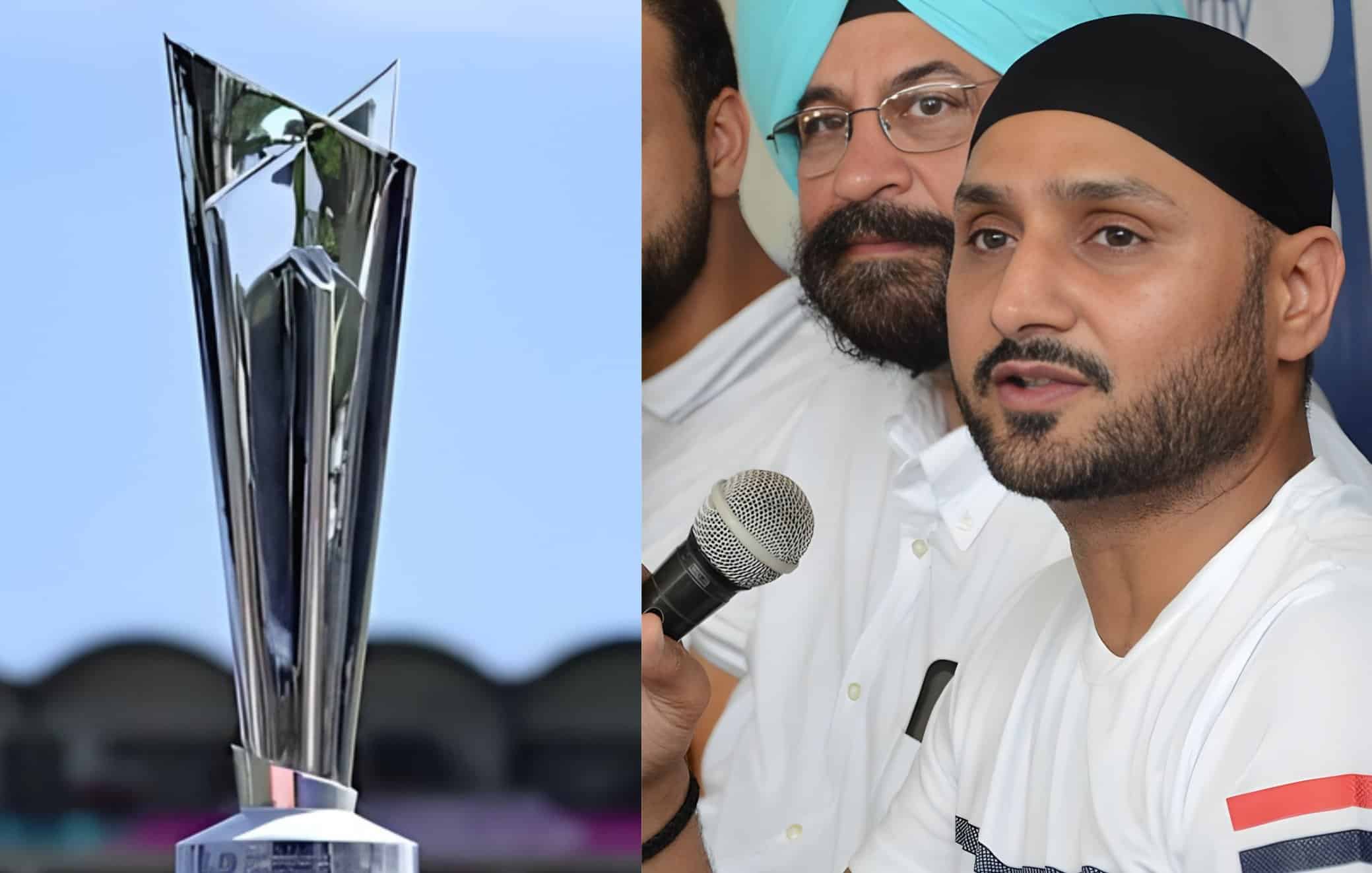
Harbhajan Singh T20 World Cup Blueprint Sends Clear Message
Harbhajan Singh T20 World Cup blueprint has sparked strong discussion as India fine-tunes its preparations for the upcoming global tournament. The former India off-spinner has delivered a blunt reminder that success at World Cups depends less on batting depth and more on wicket-taking quality. His message is simple yet firm — tournaments are won by bowlers, not just big hitters.
As India continues to debate combinations and roles, Harbhajan Singh T20 World Cup blueprint calls for a clear strategic reset. Instead of overloading the lineup with batters, he believes India must trust specialist bowlers to control games and deliver under pressure.
Five Specialist Bowlers As A Default Strategy
At the heart of Harbhajan Singh T20 World Cup blueprint is a strong recommendation — India should play with five specialist bowlers as a default approach. Not as a backup plan or a situational experiment, but as a core tournament strategy.
According to Harbhajan, India’s recent tendency to strengthen batting depth has often come at the cost of leaving out genuine wicket-taking options. This compromise, he warned, has repeatedly hurt India during crucial knockout matches at global events.
Bowlers Win Tournaments, Not Just Matches
Harbhajan Singh T20 World Cup blueprint is rooted in a long-standing cricketing belief — batters may win matches, but bowlers win tournaments. While the phrase is familiar, Harbhajan reinforced it with recent on-field evidence rather than nostalgia.
Referring to the India-New Zealand T20 match in Raipur, he highlighted how wrist spinners Kuldeep Yadav and Varun Chakravarthy changed the game. Together, they picked up three key wickets while conceding just 70 runs on a flat pitch with a wet ball, proving their value beyond mere containment.
Kuldeep Yadav And Varun Chakravarthy As A Pair
One of the strongest elements of Harbhajan Singh T20 World Cup blueprint is his insistence that Kuldeep Yadav and Varun Chakravarthy should play together. He described them as true game-changers rather than defensive options.
According to Harbhajan, both spinners possess the ability to break partnerships and shift momentum at critical moments. In matches where the opposition appears to be cruising, wicket-taking spinners often become the difference between a competitive total and a match-winning advantage.
Dew Factor And Challenges For Fast Bowlers
Harbhajan Singh T20 World Cup blueprint also accounts for modern T20 conditions, especially the impact of dew. He pointed out that in night games, a slippery ball neutralises even the best fast bowlers.
Yorkers miss their mark, defensive bowling becomes predictable, and containment replaces aggression. In such scenarios, Harbhajan argued that only genuine wicket-takers — regardless of conditions — can still force breakthroughs and regain control.
Named Bowlers Who Must Lead India’s Attack
While outlining Harbhajan Singh T20 World Cup blueprint, the former spinner named a core group of bowlers he believes should shoulder responsibility. Jasprit Bumrah, Arshdeep Singh, Harshit Rana, Kuldeep Yadav, and Varun Chakravarthy were highlighted as bowlers capable of delivering under pressure.
He emphasized that these bowlers are not just economical options but match-winners who can change games even when conditions favour batters. Their ability to strike at key moments makes them invaluable in World Cup cricket.
Criticism Of Batting-Heavy Combinations
A major critique within Harbhajan Singh’s T20 World Cup blueprint is India’s obsession with batting depth. Harbhajan questioned the logic of playing an eighth batter in T20 matches, arguing that such players are rarely used and often block a spot meant for a frontline bowler.
Instead, he suggested that India trust its top and middle order to manage innings sensibly. With quality batters available, sacrificing a specialist bowler for extra batting depth rarely delivers long-term benefits at the tournament level.
Smarter Powerplay Approach Suggested
Harbhajan Singh T20 World Cup blueprint also addresses India’s batting approach during the powerplay. He advocated for controlled aggression rather than an all-out assault in the first three overs.
According to him, losing early wickets in pursuit of quick runs often puts unnecessary pressure on the middle order. A more measured approach, even if it costs a few runs early, allows India’s deep batting lineup to build innings over 14 to 15 overs.
Bilateral Series Vs World Cup Mindset
A key philosophical point in Harbhajan Singh T20 World Cup blueprint is the distinction between bilateral series and World Cups. He stressed that experimentation is acceptable in home series but dangerous in global tournaments.
World Cups, he argued, demand clarity, balance, and reliance on proven performers. Frequent changes and experimental combinations often lead to confusion and lack of rhythm during crucial matches.
Message For Team Management And Selectors
Harbhajan Singh T20 World Cup blueprint ultimately serves as advice for India’s team management and selectors. His message is not about excluding batters, but about restoring balance and trusting bowlers to win matches when it matters most.
With the squad packed with explosive batting talent, Harbhajan believes India can afford to strengthen its bowling without compromising scoring potential. The challenge lies in making bold but sensible decisions.
Final Thoughts On Harbhajan Singh T20 World Cup Blueprint
As the T20 World Cup approaches, Harbhajan Singh’s T20 World Cup blueprint cuts through the noise with clarity and conviction. His emphasis on wicket-taking bowlers, balanced combinations, and tournament-specific thinking offers a roadmap for success.
Whether India adopts his blueprint or not, the message is clear — trusting bowlers, maintaining balance, and avoiding batting overload could be the key to lifting another global trophy.
🔗 Visit our other platforms:
8jjSports.com