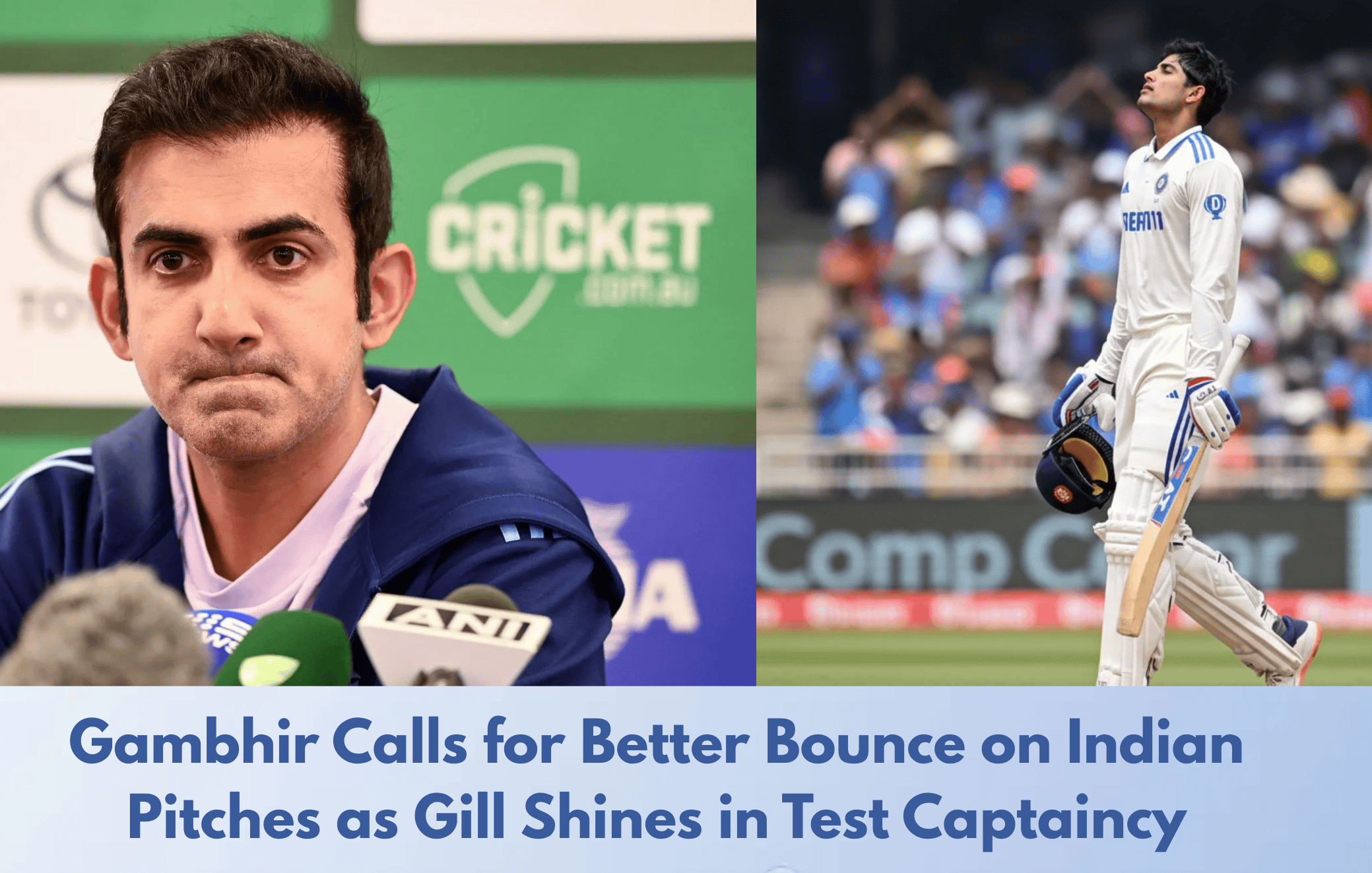
Gautam Gambhir has called for a shift in the preparation of Indian pitches, emphasizing the need for more bounce and carry following India’s hard-fought seven-wicket victory over West Indies in the second Test. While India secured a win, the match highlighted the challenges bowlers face on Indian tracks that often fail to provide adequate assistance, requiring teams to spend prolonged periods at the crease. India bowled 200 overs across both West Indies innings, underlining the physical and mental toll on the bowlers in the absence of favorable conditions.
Rethinking Pitch Preparation in India
Moving Away from Slow, Turning Tracks
Gambhir, speaking after the match, noted that the traditional approach of preparing slow, low-bouncing pitches has often led to one-sided contests that heavily favor spin. Following India’s 3-0 Test series defeat to New Zealand last year, it has become clear that a more balanced contest between bat and ball is necessary for the development of competitive Test cricket in the country.
“I thought we could have had a better wicket here. There needs to be something for fast bowlers as well. It is okay if there isn’t enough turn, but there has to be carry. The lack of carry was a bit concerning, and going forward, we hope to prepare better pitches to keep Test cricket alive,” Gambhir said.
The coach’s comments reflect a growing awareness in Indian cricket circles that pitches should support both seamers and spinners to maintain a fair and competitive balance.
Challenges Faced by Bowlers
Even though India managed substantial first-innings totals in both Tests, their bowlers struggled to dismiss West Indies, particularly in Delhi, after enforcing the follow-on. The absence of sufficient carry made it difficult for fast bowlers to extract meaningful movement off the pitch, placing additional pressure on spinners to compensate. Gambhir stressed that addressing these issues is vital for nurturing homegrown fast bowlers and sustaining India’s competitiveness in red-ball cricket.
Acknowledging West Indies’ Resilience
Despite the eventual defeat, Gambhir praised the West Indies team for their tenacious second-innings performance. He highlighted that the visitors’ fightback is indicative of the growing strength and confidence in their lineup.
“The way they fought in the second innings shows character. It’s good for Test cricket when visiting teams put up a fight,” he said.
By acknowledging the quality of the opposition, Gambhir underscored the value of challenging contests in developing young Indian players and maintaining high standards in Test cricket.
Shubman Gill’s Leadership Receives High Praise
Impressive Form and Composure
India captain Shubman Gill has continued to impress with his leadership and batting, particularly after guiding India to a 2-2 draw in England in his first Test series as captain. Gambhir lauded Gill’s work ethic, attitude, and example-setting, noting that his leadership is entirely merit-based.
“No one has done him a favor by appointing him Test or ODI captain. He has worked hard, demonstrates the right attitude, and leads by example. The team’s response to him has been outstanding, and he has done phenomenally well.”
Gill’s calm demeanor, technical proficiency, and strategic understanding have instilled confidence across the squad, enabling India to adapt effectively during tough phases in matches.
Leading by Example
Gill’s form at home has been equally impressive, combining patient strokeplay with aggressive intent when required. His ability to anchor innings and accelerate scoring as needed has been pivotal in India’s recent performances, ensuring stability at the top of the order. Gambhir emphasized that Gill’s leadership extends beyond personal performance, fostering a culture of discipline, hard work, and mutual trust within the team.
Balancing a Busy International Schedule
Upcoming Tours and Series
Looking ahead, India faces a white-ball tour of Australia followed by a comprehensive home series against South Africa, encompassing Tests, ODIs, and T20Is. Gambhir stressed the importance of preparing players for constant format transitions, particularly with the increasing demands of modern cricket.
Domestic Cricket as a Crucial Foundation
Gambhir highlighted the role of domestic competitions such as the Ranji Trophy and India A matches in keeping players match-ready and competitive. He emphasized that domestic cricket remains the backbone of Indian cricket, helping players adapt to different conditions, refine techniques, and develop the stamina and resilience required at the international level.
“Domestic cricket is vital. It helps players stay ready amid constant format changes and ensures the next generation is prepared for international challenges,” he said.
By focusing on domestic pathways, India aims to sustain a pipeline of talent capable of performing across all formats, particularly under challenging Test conditions.
The Broader Context: Sustaining Test Cricket in India
Gambhir’s remarks reflect a broader strategic shift in Indian cricket: the need to maintain competitive home conditions while simultaneously nurturing emerging fast bowlers. Historically, Indian pitches have heavily favored spinners, which has sometimes limited the development of seam-friendly strategies. By preparing surfaces that provide bounce, carry, and fair movement, India can ensure that matches remain competitive, improve the skill sets of all-rounders, and uphold the integrity of the longest format.
Encouraging Balanced Contests
Balanced pitches not only aid bowlers but also challenge batsmen, demanding technical skill, patience, and adaptability. Such surfaces contribute to more exciting and unpredictable contests, enhancing both player development and spectator engagement. Gambhir’s emphasis on these factors indicates a forward-looking approach to sustaining Test cricket in India amid the pressures of a crowded international calendar.
Conclusion: Preparing for the Future
India’s seven-wicket victory over West Indies demonstrated the team’s resilience and adaptability, but also highlighted the limitations of current pitch conditions. Gautam Gambhir’s call for better bounce and carry is a reminder that nurturing both bat and ball is crucial for the growth of Indian cricket.
With Shubman Gill providing exemplary leadership, a focus on domestic cricket development, and an increasing awareness of pitch preparation standards, India is positioning itself to excel across formats while maintaining the competitiveness of Test cricket at home. As the team prepares for upcoming tours and series, balancing tradition, player development, and match competitiveness will remain central to their strategy.
🔗 Visit our other platforms:
8jjSports.com