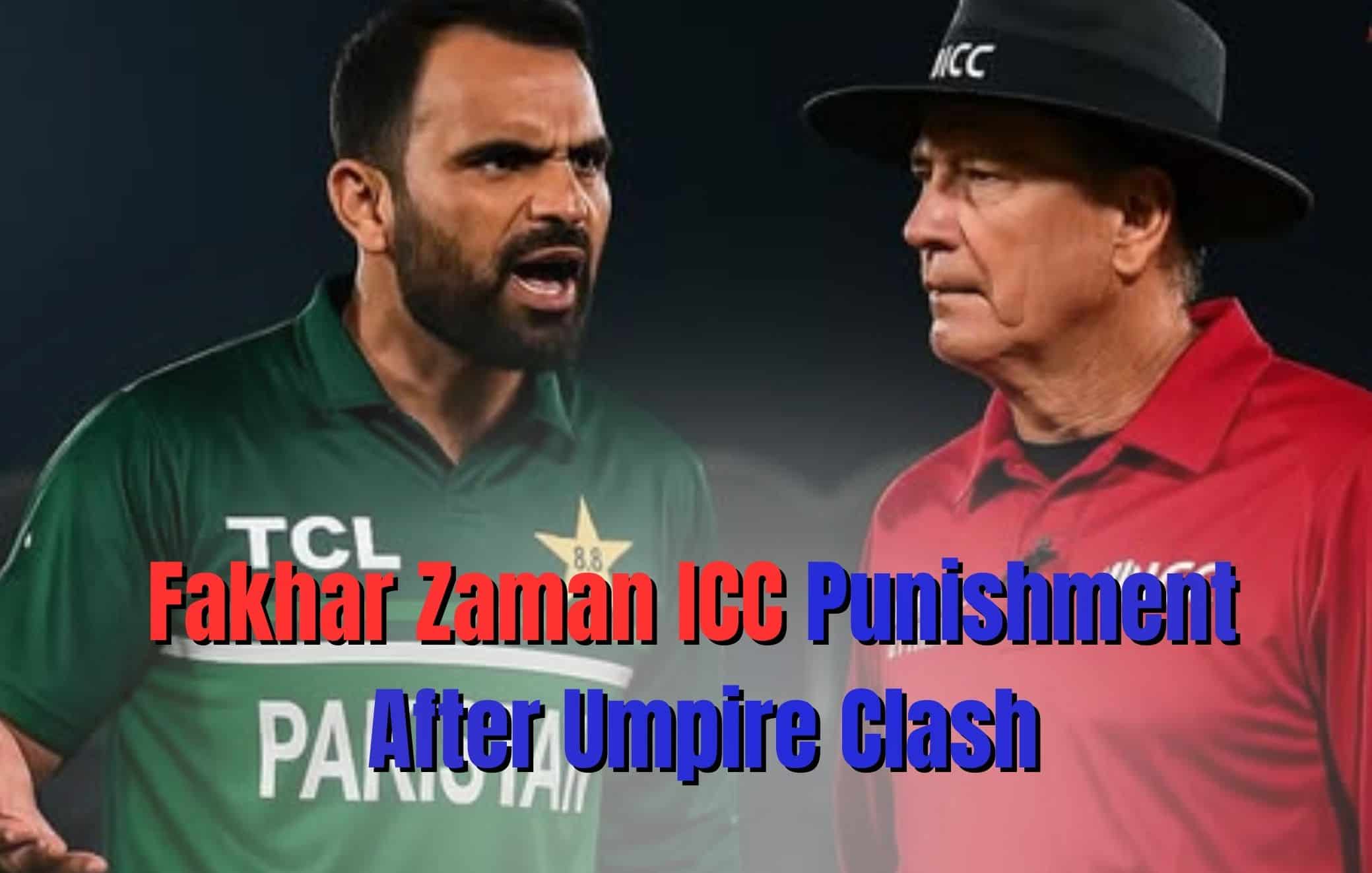
Fakhar Zaman has found himself at the centre of cricket discussions after being officially sanctioned by the ICC for his prolonged argument with on-field umpires during the Tri-Series final against Sri Lanka. The incident, which took place on November 29, has sparked widespread debate regarding player conduct and the boundaries of dissent in international cricket.
Fakhar Zaman Punished by ICC for Dissent in Tri-Series Final
The ICC confirmed that Fakhar Zaman was fined 10 percent of his match fee for breaching Level 1 of the ICC Code of Conduct. The sanction stemmed from an argument with the on-field umpires over a dismissal that left the Pakistan batter visibly frustrated.
This crucial match incident has drawn attention to both the ICC’s disciplinary structure and the expectations placed on senior players like Fakhar Zaman during pressure moments.
What Triggered Fakhar Zaman’s Offence According to ICC Code
According to the ICC, Fakhar Zaman violated Article 2.8, which deals with “showing dissent at an umpire’s decision during an international match.” This regulation is intended to ensure player discipline and preserve the authority of match officials.
The offence occurred during the 19th over of Pakistan’s innings when Fakhar became embroiled in a heated debate with umpires regarding his wicket. His frustration was visible, and the exchange continued longer than permitted under ICC conduct guidelines.
Why the Incident Fell Under a Level 1 Breach
Level 1 breaches are the lowest category of ICC offences but still carry notable penalties. These range from an official reprimand to a deduction of up to 50 percent of a player’s match fee.
In Fakhar Zaman’s case, the ICC chose a 10 percent match-fee fine and one demerit point, signalling that the dissent, though prolonged, did not cross into abusive behaviour.
Fakhar Zaman Accepts ICC Sanction Without Hearing
Once the charge was levelled, Fakhar Zaman admitted to the offence and accepted the proposed sanction from match referee Reon King. Because of this admission, no formal hearing was required.
ICC match officials Ahsan Raza, Asif Yaqoob, Rashid Riaz, and Faisal Afridi collectively reported the incident. Their observations formed the basis of the disciplinary decision.
What the Demerit Point Means for Fakhar Zaman
A single demerit point was added to Fakhar’s record. Since this was his first offence in a 24-month cycle, no further penalties apply. However, accumulating four demerit points within two years can lead to a suspension.
Thus, while this isolated breach does not severely impact Fakhar Zaman, it does increase scrutiny on his conduct moving forward.
ICC Code of Conduct — What Players Risk With Dissent
The ICC’s Code of Conduct plays a vital role in maintaining decorum on the field, especially in high-stakes matches. For players like Fakhar Zaman, disagreement with umpire decisions is understandable but must be expressed respectfully.
Excessive dissent disrupts match flow, undermines umpire authority, and sets an unhealthy precedent for younger players. The ICC’s swift response demonstrates its zero-tolerance approach to prolonged disputes.
Examples of Penalties Under Level 1 Breaches
Level 1 penalties include:
- Official reprimand
- 5–50% match-fee deduction
- 1–2 demerit points
Fakhar Zaman’s penalty fits squarely within this framework, highlighting the ICC’s consistency in enforcing rules across formats.
Tri-Series Final Context — Pakistan vs Sri Lanka
While the controversy around Fakhar Zaman dominated headlines, Pakistan’s performance in the Tri-Series final should not be overlooked. The team executed a commanding win over Sri Lanka, showcasing strong all-round cricket.
Shaheen Afridi and Mohammad Nawaz were instrumental with the ball, each claiming three wickets to restrict Sri Lanka to 114 runs.
Pakistan’s Chase Led by Babar Azam and Saim Ayub
In response, Pakistan comfortably chased down the target with six wickets in hand. Babar Azam, who remained unbeaten on 37, anchored the innings with authority. Saim Ayub provided early momentum with a well-constructed 36.
Their partnership ensured Pakistan lifted the Tri-Series trophy without difficulty, overshadowing the tension caused earlier in the innings by Fakhar Zaman’s dismissal.
Pakistan’s Exceptional T20I Year Adds Perspective
This victory capped a highly successful year for Pakistan, who have now won 21 out of 34 T20Is, marking their highest tally in a single calendar year.
The team’s consistency across conditions and against varied opponents highlights their strategic growth heading into important international fixtures.
How Fakhar Zaman Fits Into Pakistan’s T20I Progress
Despite his recent disciplinary setback, Fakhar Zaman remains a crucial figure in Pakistan’s white-ball setup. Known for his power hitting and experience in tight chases, he has often provided Pakistan with momentum at critical junctions.
The ICC sanction, while noteworthy, is unlikely to overshadow his long-term contributions or diminish his place in the squad.
Reactions to Fakhar Zaman’s ICC Punishment
Fans and analysts have reacted strongly to the news of Fakhar Zaman’s punishment. Some believe the batter’s frustration was justified given the match situation, while others insist that international players must maintain composure regardless of circumstances.
The conversation has reignited debates about umpire accountability, player emotions, and where cricket should draw the line when it comes to dissent.
Why This Incident Matters for Player Behavior Standards
Incidents like Fakhar Zaman’s are critical reminders that international cricket operates under strict codes that players must follow. Maintaining professionalism, even during controversial decisions, ensures respect across all levels of the sport.
As cricket becomes increasingly competitive, these disciplinary checks help preserve the spirit of the game.
What Fakhar Zaman’s ICC Penalty Means Going Forward
Fakhar Zaman’s fine and demerit point serve as an important reminder of the ICC’s expectations for player conduct. While the incident was unfortunate, it does not overshadow Pakistan’s success in the Tri-Series or the batter’s contributions to the team.
Moving ahead, Fakhar will be expected to channel his competitive intensity more constructively, ensuring he avoids further disciplinary issues while continuing to play a major role in Pakistan’s white-ball campaigns.
🔗 Visit our other platforms:
8jjSports.com