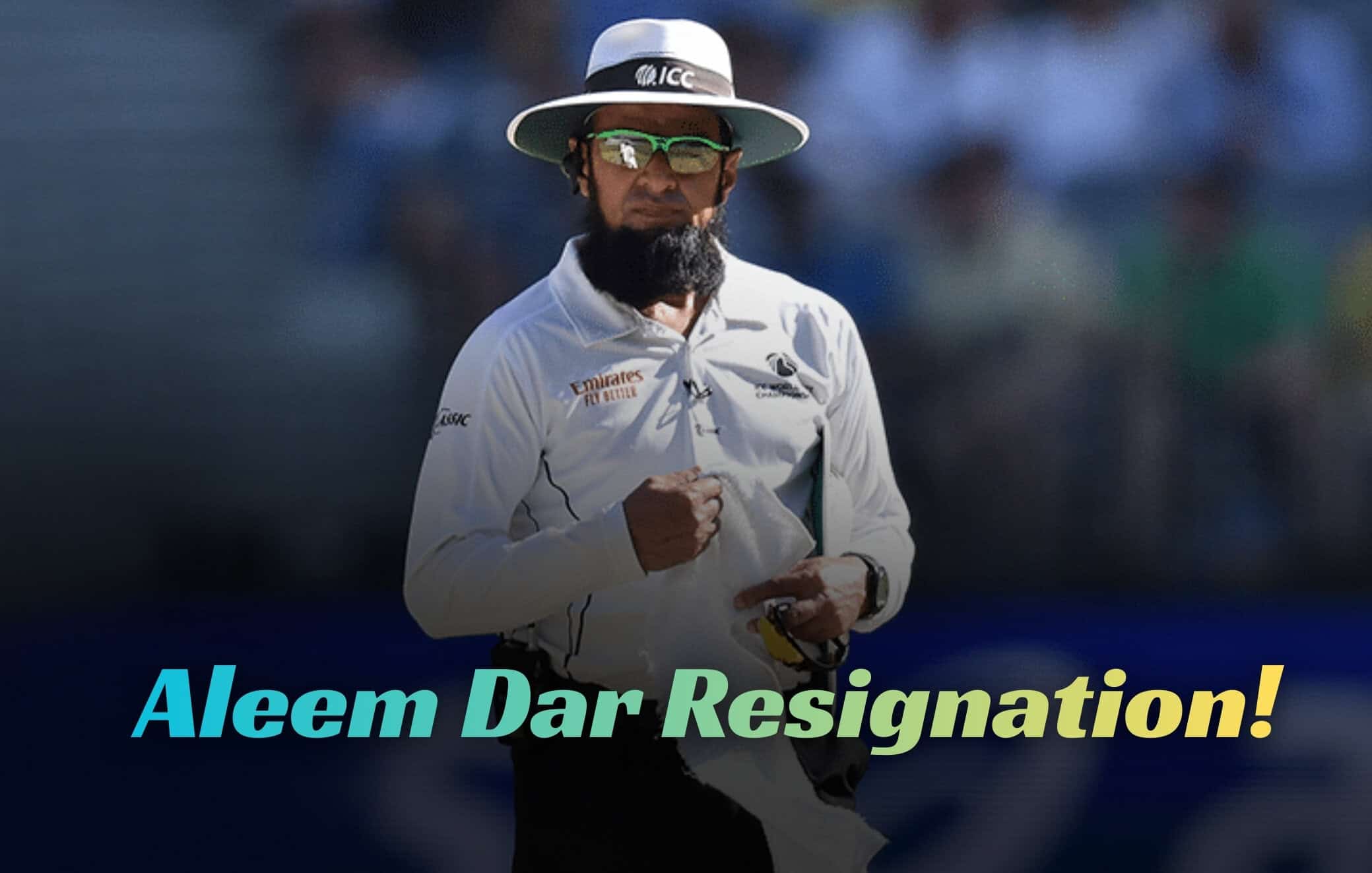
Aleem Dar resignation has become one of the most talked-about developments in Pakistan cricket following the team’s disappointing campaign in the T20 World Cup 2026. The former elite-panel umpire stepped down from Pakistan’s selection committee, highlighting internal disagreements, lack of autonomy, and growing tensions within the Pakistan Cricket Board. The Aleem Dar resignation has raised serious questions about the decision-making structure inside the national team setup and has triggered fresh debate over player selection policies. Aleem Dar Resignation Explained: Pakistan Cricket Faces Internal Turmoil
The Aleem Dar resignation comes shortly after Pakistan failed to progress beyond the Super Eight stage of the T20 World Cup 2026. The team’s early exit included high-profile defeats against India and England, results that intensified scrutiny on both the players and the management.
Dar joined the Pakistan Cricket Board selection committee in 2024 with the goal of strengthening a performance-based selection system. However, insiders suggest that the selection process became increasingly complicated due to internal disagreements and growing influence from coaching staff.
The Aleem Dar resignation highlights deeper problems within Pakistan cricket administration, where selectors reportedly struggled to maintain independent authority over squad decisions.
Pakistan Selection Committee Conflict and Player Selection Disputes
One of the central issues behind the Aleem Dar resignation was reportedly the final composition of Pakistan’s T20 World Cup squad. Dar is believed to have strongly opposed the inclusion of certain senior players based on their recent performances.
The former umpire reportedly raised concerns about selecting Babar Azam and Shadab Khan without sufficient performance backing. His stance focused on maintaining a merit-based system where recent form would play a key role in squad selection.
However, those recommendations were reportedly ignored during the final decision-making process. Both Babar Azam and Shadab Khan eventually made the squad, but their performances during the tournament were widely criticized.
The disagreement surrounding Babar Azam selection dispute became a major point of tension within the committee. Critics argued that the team management favored established names rather than evaluating players strictly on form.
Aleem Dar reportedly viewed this approach as a step away from the merit-based selection model he believed Pakistan cricket needed.
Aleem Dar vs Coach Influence: Mike Hesson’s Role in Selection Decisions
Another significant factor in the Aleem Dar resignation involved what was described as “extraordinary interference” from the team’s coaching setup.
Reports indicate that head coach Mike Hesson played a strong role in influencing final squad decisions. Dar allegedly felt that the selection committee’s authority was being gradually reduced as coaching staff gained greater control over player choices.
This tension escalated during discussions about the World Cup squad. Dar reportedly opposed some selections, but the coaching staff insisted on their inclusion.
Sources suggest that Hesson’s influence was supported by fellow selector Aaqib Javed, creating a power dynamic that left Dar feeling increasingly sidelined.
The situation reflected a broader structural issue within the Pakistan selection committee, where overlapping authority between selectors and coaches created confusion and conflict.
Merit-Based Selection Debate and Mohammad Rizwan Role Proposal
The Aleem Dar resignation also stemmed from disagreements about the team’s tactical structure.
Dar reportedly suggested a specific role for veteran wicketkeeper-batter Mohammad Rizwan. Instead of reshuffling the lineup, he recommended assigning Rizwan a defined position at number six to strengthen the middle order.
His proposal aimed to balance experience and stability within the squad while allowing younger players to take on larger responsibilities.
However, the idea did not gain traction within the selection committee discussions. Dar’s suggestion was ultimately overlooked, further adding to his frustration regarding the decision-making process.
Supporters of the merit-based selection system believe that the rejection of such proposals demonstrated the lack of open debate inside the committee.
Dar reportedly felt that his contributions were not receiving the level of consideration expected from a senior selector with extensive cricket experience.
Pakistan Cricket Administration and Leadership Concerns
Another factor contributing to the Aleem Dar resignation was the perceived absence of strong internal discussions within the committee.
Reports indicate that Pakistan captain Salman Ali Agha and other committee members did not challenge the growing hierarchy that influenced selection decisions.
This created a situation where Dar believed he was isolated in raising concerns about team selection policies.
The absence of a balanced discussion environment reportedly played a significant role in his decision to step down.
For a former international umpire with decades of experience in elite cricket, the lack of collaborative dialogue within the Pakistan Cricket Board structure became increasingly frustrating.
Many observers believe that the Aleem Dar resignation reflects deeper administrative issues rather than a single disagreement.
Pakistan Cricket Board Faces Selection Committee Overhaul
Following the Aleem Dar resignation, the Pakistan selection committee now consists of Aaqib Javed, Asad Shafiq, and data analyst Usman Hashmi.
The reduced panel places additional pressure on the Pakistan Cricket Board to reconsider its selection framework before the next international cycle begins.
Cricket analysts believe the board may need to review the balance of power between selectors and coaching staff to prevent similar conflicts in the future.
The Aleem Dar resignation has sparked discussions about whether selectors should have final authority over squad decisions or if coaching staff should play a larger strategic role.
Clearer governance structures could help restore confidence in Pakistan cricket’s management system.
Impact of T20 World Cup 2026 Exit on Pakistan Cricket
Pakistan’s disappointing T20 World Cup 2026 campaign has already led to financial penalties for players due to underwhelming performances.
However, the Aleem Dar resignation indicates that the issues within Pakistan cricket extend beyond on-field results.
Internal disagreements, selection controversies, and leadership questions have all emerged as key concerns following the tournament.
The situation highlights how administrative challenges can influence team performance and long-term planning.
Experts believe that rebuilding trust within the Pakistan selection committee will be essential as the team prepares for upcoming international competitions.
Future of Pakistan Selection Committee After Aleem Dar Resignation
The Aleem Dar resignation marks a significant moment for Pakistan cricket administration.
As one of the most respected figures in international cricket, Dar’s decision to step down has drawn attention to the internal dynamics of the Pakistan Cricket Board.
Moving forward, the PCB faces the challenge of strengthening transparency, restoring confidence in the selection process, and ensuring that decisions are made collaboratively.
Whether through structural reforms or clearer roles within the selection committee, Pakistan cricket must address the concerns highlighted by this episode.
For many observers, the Aleem Dar resignation serves as a reminder that successful teams rely not only on talented players but also on strong governance and effective leadership behind the scenes.
🔗 Visit our other platforms:
8jjSports.com