BCCI reaction to Bangladesh’s request to shift its T20 World Cup matches has brought a fresh controversy into global cricket, with safety concerns, IPL decisions, and geopolitical tensions colliding ahead of the marquee tournament. The issue surfaced after the Bangladesh Cricket Board was instructed by its government to seek relocation of its World Cup league matches from India to Sri Lanka, triggering a strong response from Indian cricket authorities.
BCCI Reaction to Bangladesh T20 World Cup Shift Request
The BCCI reaction was swift and firm after reports emerged that Bangladesh wanted its T20 World Cup league matches moved out of India. With the tournament less than a month away, Indian cricket officials made it clear that altering venues at this stage would be extremely difficult, citing logistical, broadcast, and scheduling challenges.
The controversy has placed the Jay Shah-led ICC in a delicate position, as it balances tournament planning with concerns raised by a participating nation.
Why Bangladesh Raised Safety Concerns
The Bangladesh government’s intervention followed the release of left-arm pacer Mustafizur Rahman from the Indian Premier League on BCCI instructions. The move sparked alarm within Bangladesh’s sporting and political circles, leading to questions about player safety in India during the T20 World Cup.
According to officials, if a Bangladeshi player could not continue in the IPL despite a valid contract, it raised concerns about the national team’s comfort and security while travelling to India.
Mustafizur Rahman IPL Exit Sparks Bigger Debate
The BCCI reaction cannot be separated from the IPL controversy that triggered the chain of events. Mustafizur Rahman was signed by Kolkata Knight Riders for a significant sum following a bidding war, only to be released later on BCCI directives.
IPL Decision and Its Fallout
Kolkata Knight Riders, co-owned by Shah Rukh Khan, complied with the BCCI’s instructions and released Mustafizur Rahman despite having invested heavily in him. While the BCCI did not explicitly link the decision to political developments, it acknowledged that the move was influenced by the prevailing situation.
This development escalated quickly from a franchise-level issue into a diplomatic and international cricket matter.
Bangladesh Government Steps In
The Bangladesh Cricket Board found itself under direct instruction from the country’s sports ministry, significantly raising the stakes of the situation.
Asif Nazrul’s Directive to BCB
Government advisor Asif Nazrul publicly stated that he had instructed the Bangladesh Cricket Board to formally approach the ICC regarding the relocation of Bangladesh’s T20 World Cup matches. He emphasized that the board must document its concerns and clearly communicate them to world cricket’s governing body.
Nazrul argued that if contractual obligations could not ensure a player’s participation in India, the national team could not be expected to feel secure during the World Cup.
Proposed Shift of Bangladesh T20 World Cup Matches
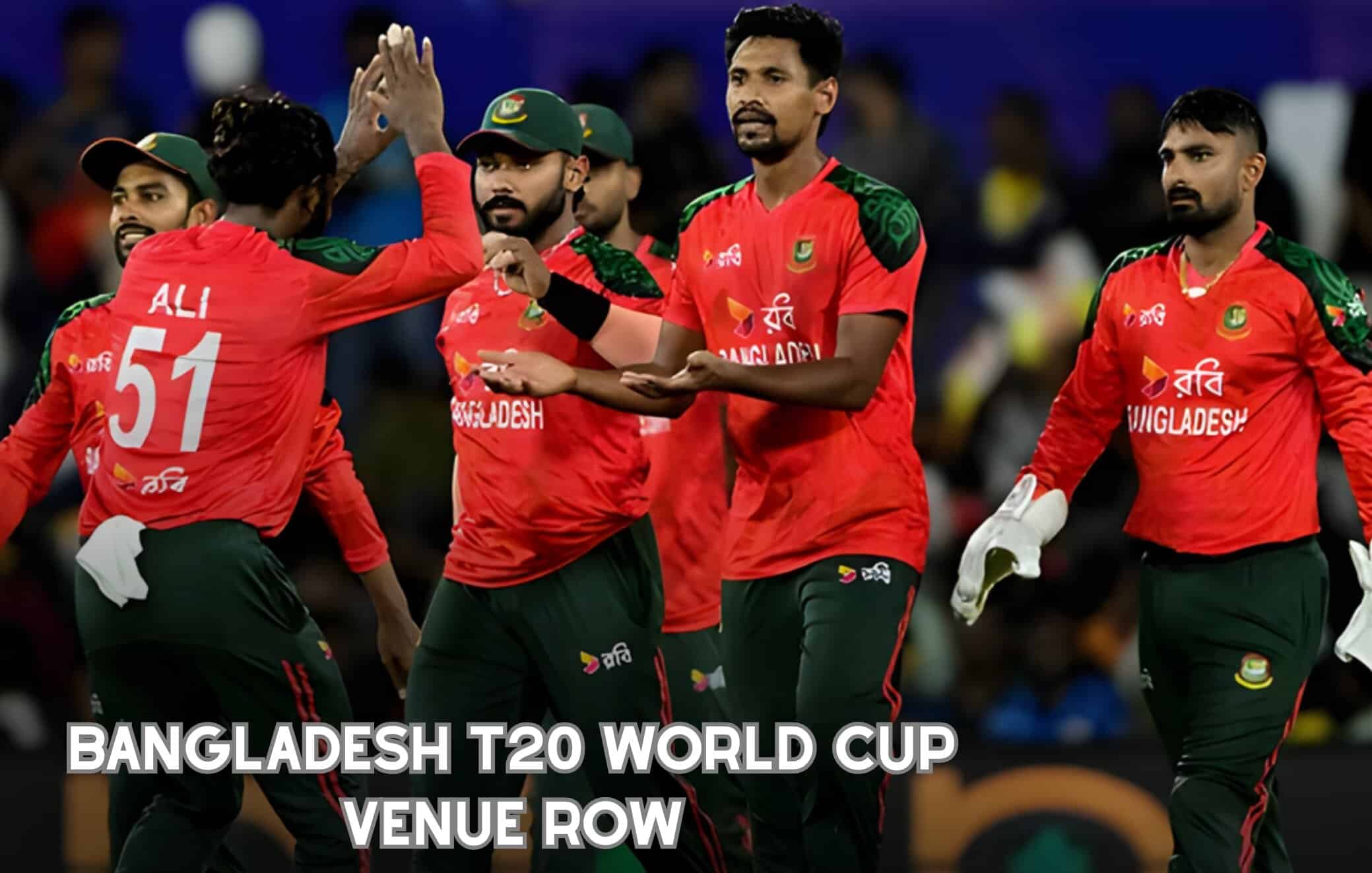
Bangladesh are scheduled to play four league matches in the T20 World Cup, three in Kolkata and one in Mumbai. The request to move all four games to Sri Lanka would require a major reshuffle of tournament logistics.
Bangladesh’s Group Fixtures
Bangladesh’s scheduled league matches include fixtures against West Indies, Italy, and England in Kolkata, followed by a final group game against Nepal in Mumbai. Any change to these venues would impact multiple teams, broadcasters, and local organizers.
This is where the BCCI reaction turned firm, stressing that such changes are not feasible at short notice.
BCCI Sources Dismiss Relocation Feasibility
Senior BCCI officials privately described the proposed shift as nearly impossible, given the scale of planning involved in hosting a global tournament.
Logistical Challenges Highlighted
According to BCCI sources, air travel arrangements, hotel bookings, match officials, broadcast crews, and security deployments have already been finalized. With multiple matches scheduled daily, shifting games to another country would create a domino effect across the entire tournament calendar.
The BCCI reaction emphasized that World Cup fixtures cannot be altered based on unilateral requests, particularly when they affect other participating teams.
ICC’s Role Amid Rising Tensions
The ICC now finds itself at the center of a complex dispute involving two full-member nations, political sensitivities, and commercial obligations.
Jay Shah-Led ICC Under Pressure
As ICC chairman, Jay Shah will have to navigate the situation carefully, balancing Bangladesh’s concerns with the practical realities highlighted by the BCCI reaction. Any decision will set a precedent for how future disputes of this nature are handled.
The ICC has previously adjusted schedules under exceptional circumstances, but officials indicate that such changes are usually planned months in advance.
Pakistan’s Separate Arrangement Adds Context
One factor often cited in Bangladesh’s argument is Pakistan’s decision to play its World Cup matches in Sri Lanka rather than India.
Different Circumstances, Different Decisions
However, Indian cricket officials have pointed out that Pakistan’s arrangement was agreed upon well in advance as part of a broader understanding. The BCCI reaction suggests that last-minute changes cannot be compared to decisions taken months earlier through mutual consent.
Political Backdrop Intensifies the Issue
The cricketing dispute cannot be fully understood without acknowledging the strained political relationship between India and Bangladesh in recent months.
Impact of Bangladesh Political Crisis
Relations deteriorated following the ouster of Bangladesh Prime Minister Sheikh Hasina, who fled to India amid widespread protests. The subsequent political unrest, including violence and targeted attacks, has heightened sensitivities on both sides.
Although the BCCI has not officially linked its IPL decision to political developments, the broader context has undeniably influenced perceptions.
Player Safety at the Heart of the Debate
At the center of the controversy lies the question of player safety, an issue the ICC treats with utmost seriousness.
BCCI Assurances on Hosting Security
The BCCI reaction maintains that India remains fully capable of hosting international teams safely, as demonstrated by numerous global tournaments in recent years. Indian officials believe that concerns are being amplified by political narratives rather than ground realities.
What This Means for the T20 World Cup
With the tournament approaching rapidly, clarity is needed to avoid distractions that could overshadow the cricket itself.
Likely Outcome of the Venue Dispute
Given the firm BCCI reaction and logistical realities, a venue shift appears highly unlikely unless the ICC intervenes under extraordinary circumstances. Bangladesh may be required to proceed with the original schedule, while diplomatic channels continue discussions off the field.
Final Analysis on BCCI Reaction and Bangladesh Row
The BCCI reaction to Bangladesh’s attempt to shift T20 World Cup matches underscores the complexity of hosting global sporting events amid political and security concerns. What began as an IPL-related decision has escalated into a significant international issue involving cricket boards, governments, and the ICC.
As the World Cup draws closer, all parties will need to prioritize dialogue and cooperation to ensure that the focus returns to cricket. While Bangladesh’s concerns have been formally raised, the current indications suggest that the tournament will proceed as planned, with India remaining a key host nation.
🔗 Visit our other platforms:
8jjSports.com