Pink ball Tests have reshaped how Test cricket is played, watched, and evaluated, creating conditions that punish technical flaws and reward discipline. Introduced to attract evening audiences while preserving the traditional format, these matches have quickly become the most demanding environment for batters, redefining what consistency means at the highest level.
The pink ball behaves differently from the red ball across sessions. Swing increases at twilight, seam movement intensifies under lights, and visibility fluctuates as natural light fades. These factors compress scoring windows and make survival itself an achievement, placing a premium on technique, patience, and decision-making.
Why Day-Night Tests Changed Batting Forever
The arrival of day-night Tests altered scoring patterns across Test cricket. A batter dominating in daylight conditions may struggle when the pink ball begins to swing late, particularly during the evening session. This structural difficulty is why sustained excellence in Pink ball Tests has become a strong indicator of elite batting pedigree.
Unlike traditional matches, these games often move faster. Collapses are common, innings are shorter, and opportunities to build long scores are limited. Run tallies in this format therefore carry heavier contextual weight than raw numbers alone.
Who Has the Most Runs in Pink ball Tests?
Among all players to have featured in day-night cricket, one batter stands clearly above the rest. Statistical comparison across eras and conditions confirms a single, uncontested leader in total runs scored.
This dominance is not the product of volume alone. It reflects repeatable success against the toughest phase of Test cricket, where bowlers hold the advantage and margins are minimal.
Marnus Labuschagne: Defining Excellence in Pink ball Tests
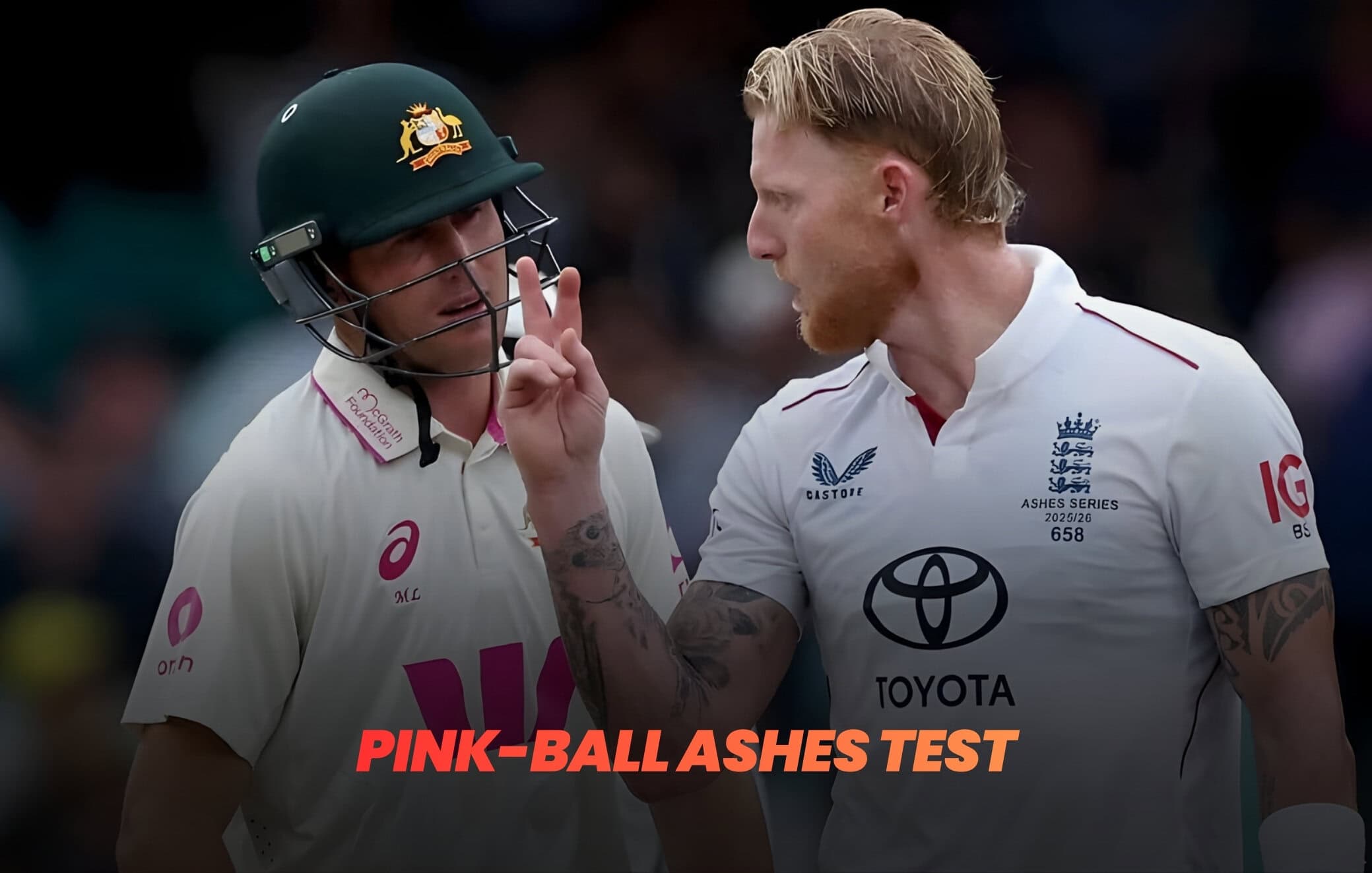
Marnus Labuschagne has scored 1026 runs in Pink ball Tests, making him the only batter to cross the 1000-run mark in this format. That figure stands alone, setting a benchmark that no contemporary player has approached.
His success is rooted in fundamentals. Labuschagne leaves well outside off stump, plays the ball late, and shows exceptional patience during the evening session. Under lights, when movement peaks and errors multiply, his method remains stable. This reliability has made him Australia’s most dependable run-scorer in day-night conditions.
Home performances, particularly at Adelaide Oval, have amplified his record. Familiarity with bounce and twilight behavior has helped, but execution remains the differentiator. Many batters play these conditions; few master them.
The Chasers: Other Leading Run-Scorers in Pink ball Tests
While Labuschagne leads comfortably, several elite players follow, reinforcing how narrow the pool of consistent performers truly is.
Steven Smith’s Mastery of Day-Night Conditions
Steven Smith sits second with 899 runs in Pink ball Tests. His unorthodox technique, built on balance and hand-eye coordination, allows him to counter late swing more effectively than most. Smith’s ability to bat time under lights has repeatedly stabilized Australia during difficult sessions.
Although he trails Labuschagne numerically, Smith’s average in day-night cricket remains among the highest, underlining his adaptability across changing conditions.
Travis Head’s Counterattacking Influence
Travis Head has accumulated 774 runs in Pink ball Tests, often through momentum-shifting innings. Unlike the accumulation-based styles of Smith and Labuschagne, Head’s impact has come from controlled aggression.
By scoring quickly before the ball begins to reverse or swing sharply, Head has altered match trajectories. His approach demonstrates that calculated attack, when executed precisely, can still succeed in this demanding format.
David Warner and the Opening Challenge
David Warner ranks next with 753 runs in Pink ball Tests, an impressive return given the difficulty of opening under lights. Facing a new pink ball during the toughest phase requires sharp judgment and decisive strokeplay.
Warner’s experience and intent allowed him to score early, reducing exposure to peak swing periods. His record highlights the added value of adaptability at the top of the order.
Joe Root: Leading the Non-Australian Contingent
Joe Root is the highest-ranked non-Australian batter, with 654 runs in Pink ball Tests. England have played fewer day-night matches, making Root’s tally particularly notable.
His technique, based on balance and soft hands, translates well across conditions. Root’s presence confirms that success in day-night cricket is not confined to Australian familiarity alone.
Why Australian Batters Dominate Pink ball Tests
Australia’s dominance in Pink ball Tests is structural rather than coincidental. The majority of day-night matches have been hosted at Adelaide Oval, creating repeated exposure for local players.
Domestic preparation, familiarity with twilight behavior, and targeted training under lights have produced a generation of batters comfortable in these conditions. This advantage compounds over time, explaining why Australian names dominate the upper end of the run charts.
The Technical Demands of Batting Under Lights
Batting in Pink ball Tests requires adjustments that red-ball cricket does not. Visibility changes rapidly, seam movement increases late, and the lacquered surface behaves unpredictably as the ball ages.
Successful batters leave aggressively, play with soft hands, and resist driving on the up. Technical discipline outweighs flair, and concentration becomes the primary currency of survival.
Discipline Over Aggression in Day-Night Cricket
The statistical leaders in Pink ball Tests share one trait: control. Labuschagne, Smith, and Root succeed not through constant strokeplay but through selective scoring and defensive certainty.
This pattern explains why many naturally aggressive batters struggle to sustain output under lights. The format exposes impatience quickly and consistently.
Pink-ball Tests Versus Traditional Test Cricket
Averages in Pink ball Tests are generally lower than in red-ball matches. Innings are shorter, collapses are frequent, and matches often conclude inside four days.
Within this context, crossing 1000 runs becomes an extraordinary achievement. Labuschagne’s record gains additional significance when viewed against reduced opportunities and heightened difficulty.
Bowlers’ Advantage and Contextual Greatness
While batting records attract attention, Pink ball Tests remain bowler-friendly. Seamers exploit swing at night, and totals are often modest by Test standards.
Against this backdrop, high run aggregates stand out sharply. They reflect not only skill but resilience in conditions designed to challenge batters relentlessly.
The Future of Pink ball Tests and Run Records
As more boards adopt day-night Tests, opportunities to challenge existing records will increase. However, surpassing the current benchmark will demand longevity, technical excellence, and sustained exposure.
Given the difficulty of the format, future contenders will need years of consistent selection and adaptability to approach the top of the list.
The Definitive Answer on Pink ball Tests
Pink ball Tests have redefined performance standards in modern Test cricket. Among all batters, Marnus Labuschagne has scored the most runs in Pink ball Tests, standing alone above the 1000-run mark.
His record represents mastery of the most unforgiving batting conditions the format offers. Until challenged, it remains the clearest statistical answer to one of modern Test cricket’s defining questions.
🔗 Visit our other platforms:
8jjSports.com