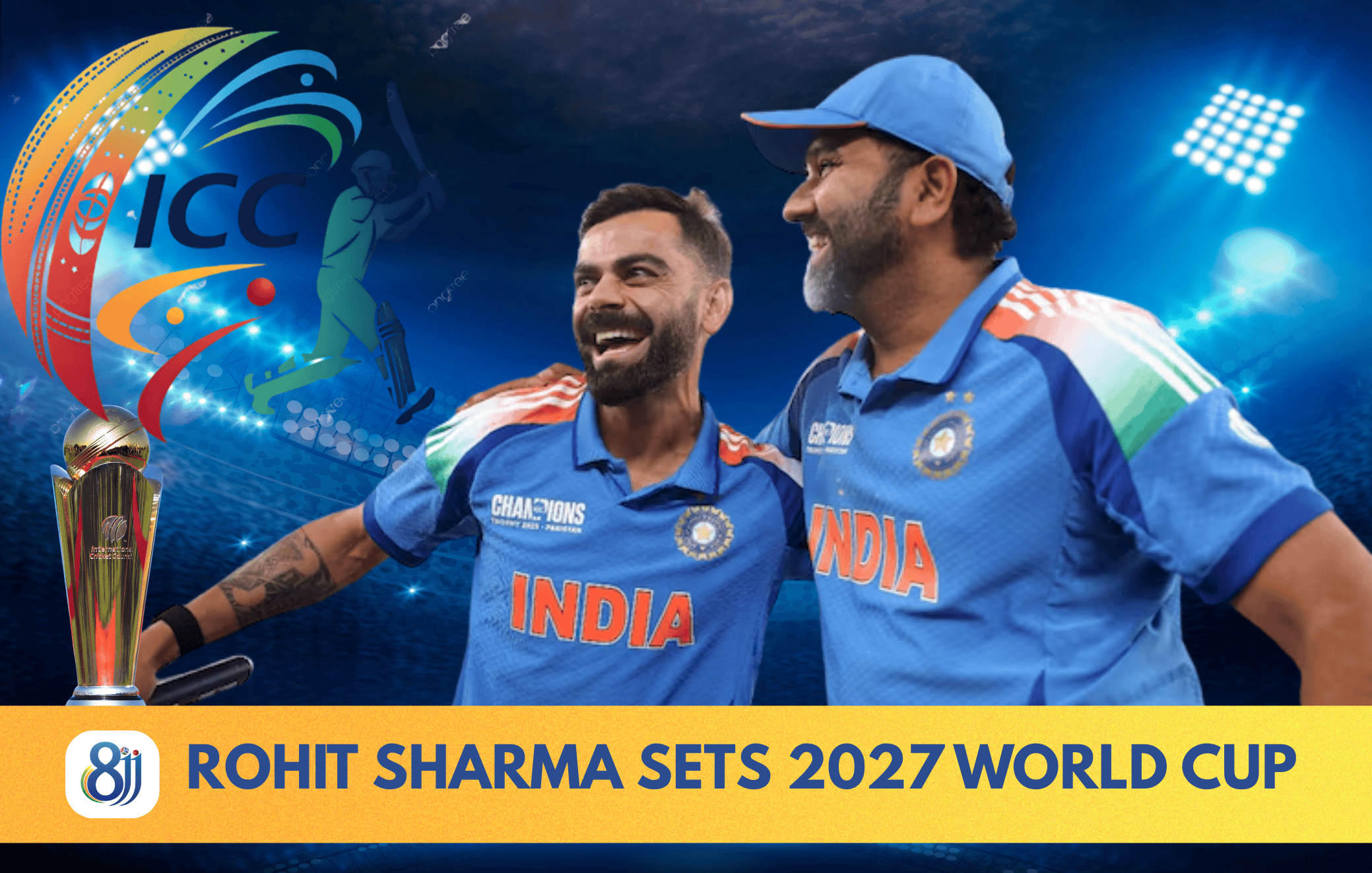
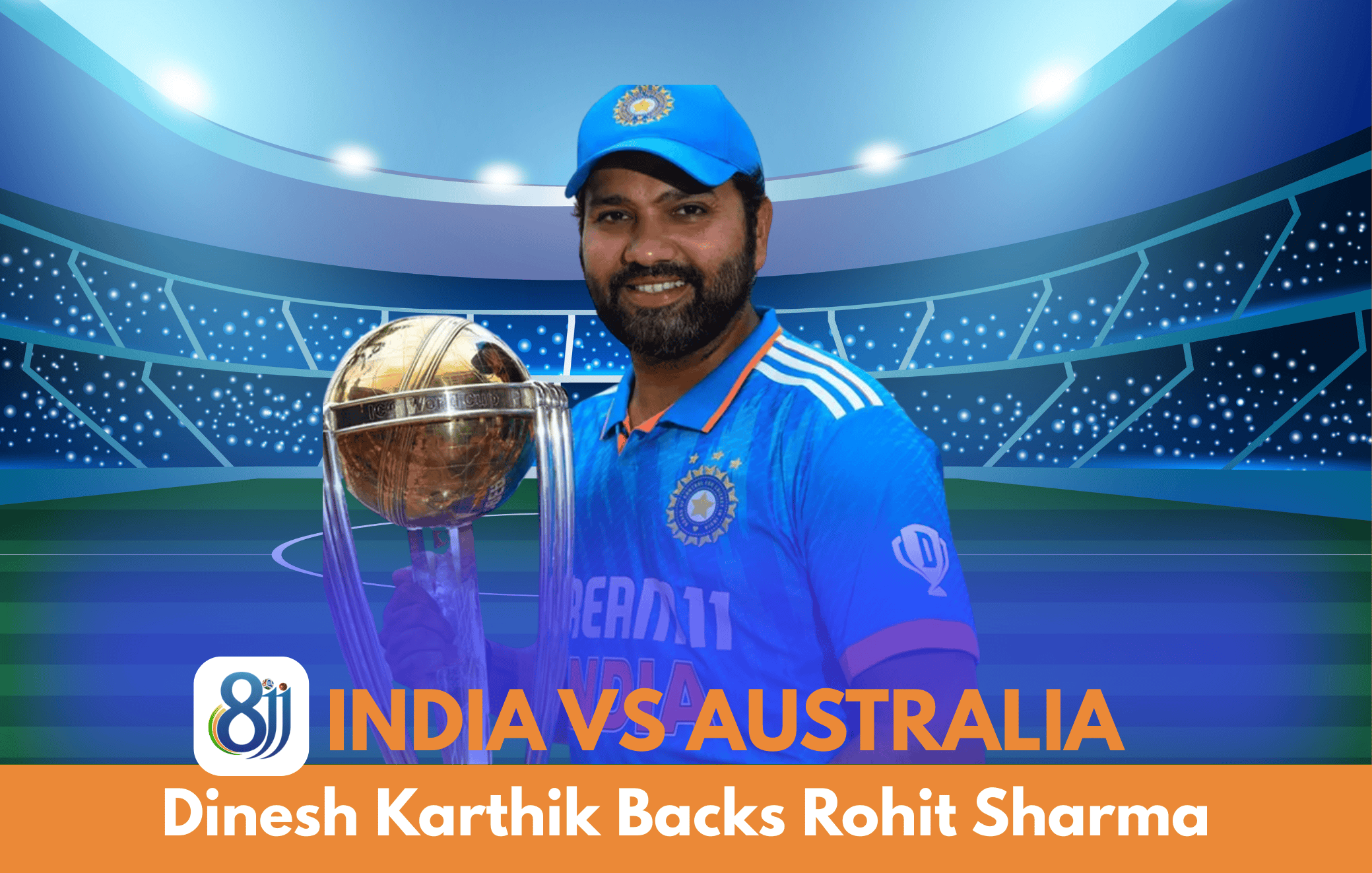
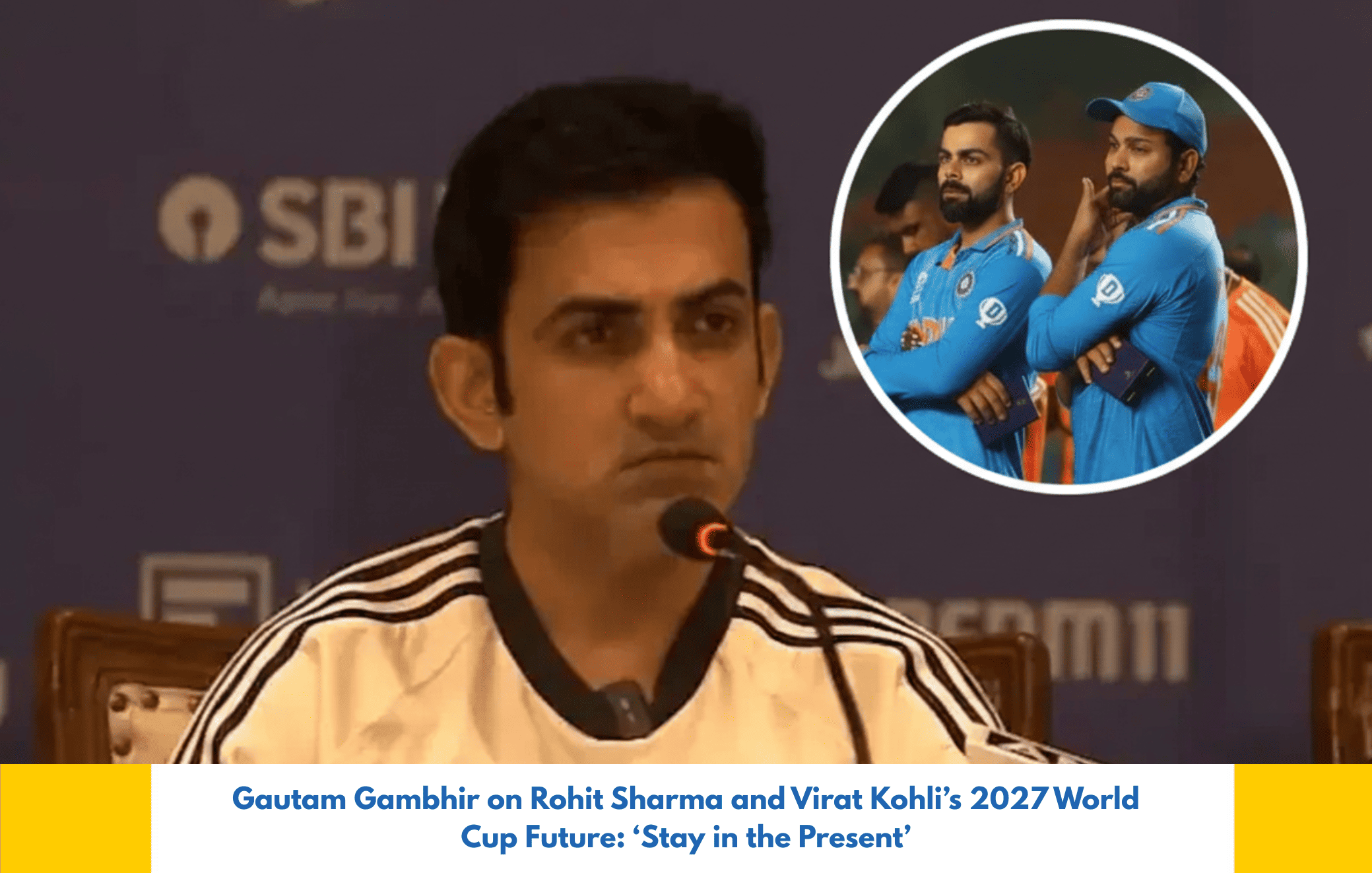
As India prepares for its three-match ODI series against Australia, Chairman of Selectors Ajit Agarkar has firmly rejected the notion that senior players Rohit Sharma and Virat Kohli are on trial. Addressing questions about the future of these two cricketing stalwarts, Agarkar made it clear that while the 2027 ICC Men’s World Cup looms large, the focus for now remains on the present squad and its immediate performance development.
Speaking at the NDTV World Summit 2025, Agarkar said, “Rohit and Kohli are part of the squad for Australia. We don’t know where things will stand in two years — it could even be younger players missing out by then.” This statement reflects the selectors’ approach of focusing on the current team dynamics, rather than speculating about future roles in the long-term horizon.
Rohit and Kohli: Senior Players with Proven Legacy
Both Rohit Sharma and Virat Kohli, who have now retired from Test and T20I cricket, are making the transition to a more limited role in India’s white-ball strategy. With Rohit having handed over the ODI captaincy to the young Shubman Gill, this series marks a new chapter in India’s leadership evolution. Despite this transition, Agarkar made it clear that neither player needs to prove themselves with every game, especially considering their storied careers.
“That would be a bit silly,” Agarkar responded when asked about whether Rohit and Kohli needed to prove themselves in the upcoming series. “One averages over 50 and the other close to it — they don’t need to prove their worth anymore.” Agarkar’s comments reinforce the idea that both players’ places in the team are secure, given their consistent performances and contributions over the years.
A Long-Term View: No Need for Immediate Proving Ground
Agarkar also emphasized the long-term nature of planning for the 2027 World Cup. While the selectors are undoubtedly aware of the next ODI World Cup, which will be held in India and Sri Lanka, there is still ample time to assess player form and fitness leading up to that event. Agarkar believes the focus should be on team development and performance in the present rather than putting undue pressure on veterans to prove their place.
“2027 is still a long way off, and we’ll assess as things progress.”
This comment speaks to a more measured approach by the selectors, who are mindful of the importance of balancing experience with emerging talent. Rohit and Kohli’s roles are expected to evolve as the team transitions, but their contributions will not be judged solely on the basis of a few matches.
Rohit and Kohli: The End of an Era in Tests and T20Is
Rohit Sharma and Virat Kohli both announced their retirements from T20Is and Tests following India’s 2024-25 series in Australia. Their decision to step aside from the longer formats was in part to make way for younger players, particularly with the onset of a new World Test Championship (WTC) cycle. Agarkar acknowledged that while the team would have benefited from their leadership in England, the move was a necessary one for the future of Indian cricket.
“They’ve been stalwarts of Indian cricket,” Agarkar said, praising the pair’s influence on the team. “It was a new WTC cycle, and they wanted to step aside for younger players. We would have liked their experience in England, but you have to respect their decision when senior players decide to move on.”
This statement reflects the understanding within the Indian team management of the importance of allowing senior players to make decisions based on their personal and professional goals. In stepping away from the longer formats, both players have not only ensured that their legacy remains intact but also provided opportunities for the next generation of cricketers.
Shami’s Fitness and Absence from the Australia Tour
Another topic that has raised questions is the absence of Mohammed Shami from India’s ODI squad for the series against Australia. Despite performing well in the domestic Ranji Trophy, Shami’s exclusion led to speculation regarding his fitness. Agarkar, however, clarified that Shami’s fitness is still under review, and his exclusion is based on current assessments rather than any long-term decisions.
“If he was fully fit, he would have been on that plane,” Agarkar stated when asked about Shami’s absence. “Our domestic season just began — we’ll review his fitness in the next few games. My phone is always open for players like him.”
Agarkar’s comments reveal that Shami is not being overlooked but rather undergoing close monitoring to ensure his readiness for future international commitments. The Indian selectors have always been careful with player workload and fitness, and Shami’s situation appears to be a case of cautious management rather than any permanent exclusion from the squad.
Shami’s Quality Remains Undoubted
Despite not being part of the current Australia tour, Agarkar reiterated that Mohammed Shami’s quality as a bowler remains unquestioned. Shami has been a mainstay in India’s pace attack for years, and his absence from the squad does not mean he is out of contention for the 2027 World Cup. Instead, the focus will be on ensuring that he maintains his fitness and form through the domestic season.
“If he’s bowling well and fit, why wouldn’t we want him back?” Agarkar concluded, underscoring Shami’s importance in India’s fast-bowling lineup.
Agarkar also pointed out that the selectors will continue to assess Shami’s performance in domestic cricket, including his performances in Ranji Trophy and other domestic formats, to make an informed decision on his future in the squad.
Conclusion: Focus on Team Growth and Development
Ajit Agarkar’s comments serve as a reminder that while the 2027 World Cup is in the distance, India’s immediate focus is on developing a cohesive, well-balanced squad for the present. Both Rohit Sharma and Virat Kohli remain key players in the team’s plans, and there is no immediate pressure on them to prove their worth in every match. At the same time, the selectors are committed to evaluating performances and fitness, ensuring that India has the right mix of experience and youth heading into the next World Cup cycle.
Agarkar’s approach emphasizes a balanced, forward-thinking strategy — one that respects the achievements of senior players while keeping an eye on the future. For now, India’s squad is evolving under Shubman Gill’s leadership, with the focus on nurturing talent, managing workloads, and preparing for the challenges ahead in the world of ODI cricket.
🔗 Visit our other platforms:
8jjSports.com