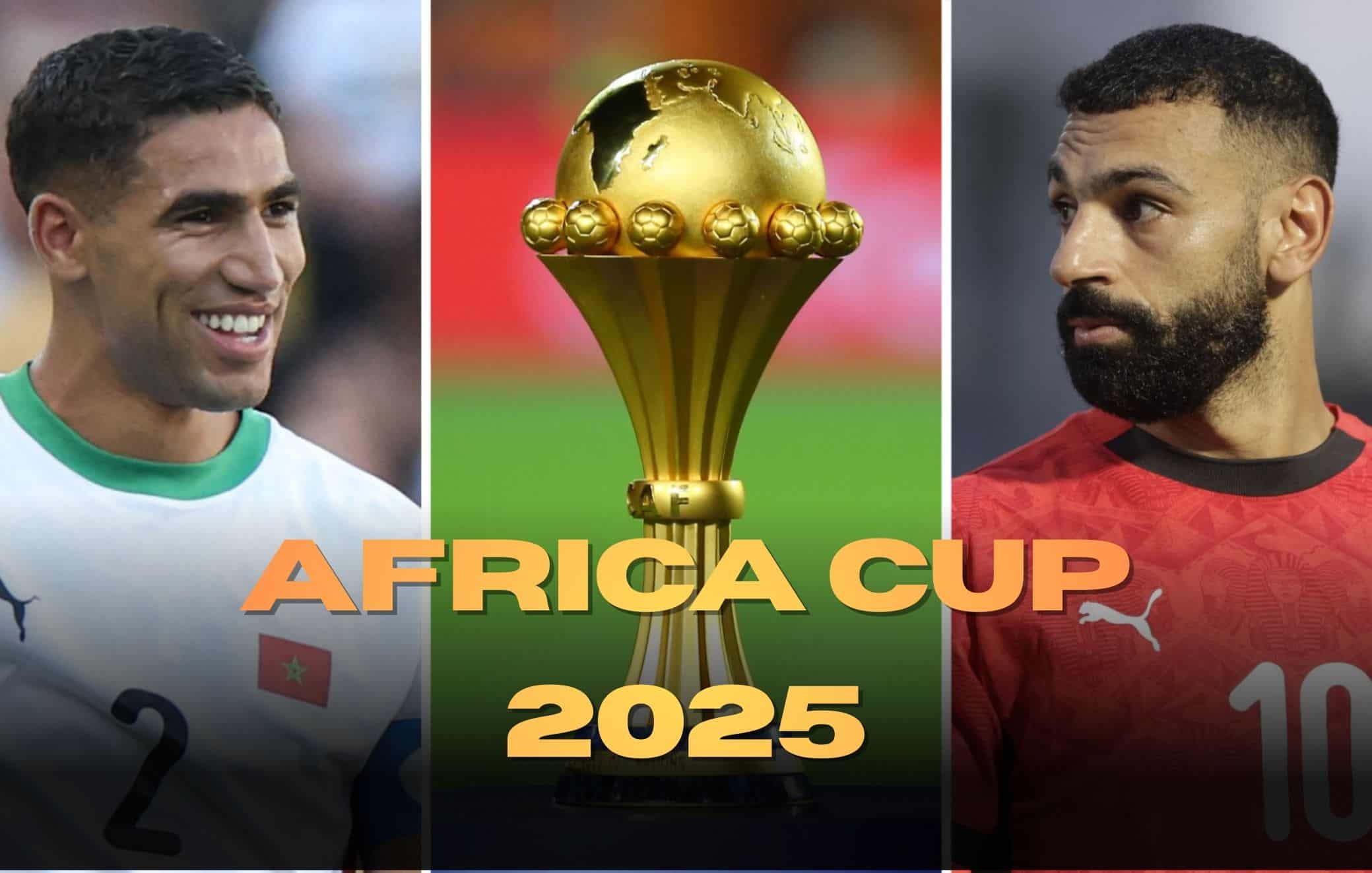
AFCON 2025 begins this weekend in Morocco, setting the stage for one of the most demanding and star-driven editions of the Africa Cup of Nations in recent memory. With the host nation carrying favorite status, Mohamed Salah leading Egypt’s title push, and concerns surrounding Achraf Hakimi’s fitness, the tournament opens under the weight of both ambition and uncertainty. The competition runs until January 18, promising a relentless schedule that will test squads, depth, and tactical discipline across the continent.
Morocco Hosts AFCON 2025 as Clear Favorites
Morocco enters AFCON 2025 carrying momentum built on sustained success at both continental and global levels. Ranked 11th in the world and fresh from a historic semi-final appearance at the 2022 World Cup, the hosts open their campaign against Comoros at the 69,000-seat Prince Moulay Abdellah Stadium in Rabat. An 18-match winning streak underlines their dominance, yet history adds pressure, with Morocco having lifted the Africa Cup of Nations only once, back in 1976. Hosting brings expectation, and anything short of a deep run would be viewed as a missed opportunity.
Achraf Hakimi Fitness a Critical Variable
Achraf Hakimi’s fitness remains a pivotal concern for Morocco. The Paris Saint-Germain right-back and reigning African Player of the Year has not featured since sustaining an ankle injury against Bayern Munich in early November. His recovery timeline could directly influence Morocco’s tactical balance, particularly in wide transitions and defensive recovery. In tournaments where margins are slim, the availability of elite full-backs often shapes outcomes more than headline attackers.
Mohamed Salah Leads Egypt Into AFCON 2025 Spotlight
Egypt arrives at AFCON 2025 with familiar ambition and unfinished business. Mohamed Salah captains a side chasing an eighth continental title, a record-extending achievement if realized. Despite appearing in AFCON finals in 2017 and 2022, Salah has yet to lift the trophy, adding personal motivation to national expectation. With uncertainty surrounding his long-term future at Liverpool, the tournament represents a potential emotional anchor point, where national duty takes precedence over club narratives.
AFCON 2025 Schedule Shaped by Global Calendar Pressures
AFCON 2025 faces structural challenges driven by an increasingly congested global football calendar. The tournament’s December start reflects adjustments made to accommodate FIFA’s expanded Club World Cup and overlapping UEFA Champions League fixtures. While most European leagues pause during winter, the English Premier League continues uninterrupted, creating friction around player release and availability. FIFA permitted clubs to release players by December 15, a compromise that balances club commitments with international preparation but compresses recovery windows for athletes.
European Clubs Feel AFCON 2025 Ripple Effects
The impact of AFCON 2025 extends beyond Africa. European clubs face mid-season disruptions as key players depart during crucial league periods. Cameroon’s potential progress could see Manchester United forward Bryan Mbeumo miss up to six Premier League matches. Such absences reshape domestic campaigns and highlight the ongoing tension between club priorities and international tournaments, particularly when competitions are staged outside traditional summer windows.
Stadium Network Showcases Morocco’s AFCON 2025 Ambitions
Morocco’s infrastructure plays a central role in AFCON 2025, with the country deploying a network of modern stadiums across multiple cities. Rabat alone hosts four venues, including the final at Prince Moulay Abdellah Stadium. Casablanca, Marrakesh, Agadir, Fez, and Tangier also stage matches, with Tangier’s 75,000-seat stadium set to host a semi-final. The tournament doubles as a rehearsal for Morocco’s role as co-host of the 2030 World Cup alongside Spain and Portugal, adding long-term significance to organizational performance.
Strong Contenders Line Up Behind AFCON 2025 Favorites
Beyond Morocco and Egypt, AFCON 2025 features a deep field of contenders capable of altering the narrative. Senegal, champions in 2022, return with experience and attacking depth through players like Sadio Mane and Iliman Ndiaye. Nigeria, runners-up in the previous edition, will lean on Ademola Lookman and Victor Osimhen, with coach Eric Chelle publicly labeling Osimhen as the world’s best striker. Algeria, led by Riyad Mahrez, seeks revival after recent setbacks, with Mohamed Amoura emerging as a prolific scoring threat.
North African Dominance Shapes AFCON 2025 Expectations
Regional trends add another layer to AFCON 2025 intrigue. North African nations have won four of the last five tournaments hosted in the region, including Algeria’s triumph in 2019 and Egypt’s success in 2006. This pattern amplifies expectations for Morocco and reinforces belief within Egypt’s camp. Familiar climates, travel conditions, and fan support have historically tilted competitive balance, making regional context a subtle but influential factor.
Physical Demands Define AFCON 2025 Tournament Path
The compressed nature of AFCON 2025 places unprecedented strain on player fitness. Limited recovery time between club obligations and international matches increases injury risk, particularly for players arriving from high-intensity European leagues. Squad rotation, medical management, and tactical conservation will be decisive, especially in knockout stages where fatigue often overrides form. Teams with depth and disciplined game management stand to benefit most.
Tactical Flexibility Becomes Key at AFCON 2025
Modern African football has evolved tactically, and AFCON 2025 reflects that shift. Teams are increasingly adaptable, capable of switching systems mid-match and exploiting transitional moments rather than relying solely on physical dominance. Coaches face the challenge of balancing pragmatism with ambition, particularly when navigating group stages that allow little margin for error.
AFCON 2025 Sets Stage for Defining Moments
AFCON 2025 arrives with a convergence of elite talent, strategic complexity, and logistical pressure. Morocco’s status as host and favorite, Salah’s pursuit of continental redemption, and the uncertainty surrounding key player fitness combine to shape a tournament rich in narrative depth. As Africa’s premier football competition unfolds, adaptability and resilience will define success. The coming weeks promise decisive moments that could reshape reputations, careers, and the continental hierarchy.
🔗 Visit our other platforms:
8jjSports.com